

You might assume that the prestigious name of a Harley Street clinic is the primary guarantor of a successful operation. However, the reality is that your long-term mobility depends far more on the specific expertise of your private hip surgeon in London than the building where the procedure takes place. When chronic pain begins to dictate your daily routine and simple movements feel like a burdensome chore, finding the right specialist becomes your most urgent priority.
It’s natural to feel overwhelmed by the technical jargon of different surgical techniques or anxious about how long it’ll take to get back on your feet. You deserve a clear, methodical path toward a pain-free life. This guide provides the expert framework you need to navigate private orthopaedic care with absolute confidence. We’ll examine how to assess a consultant’s track record, the importance of a personalised treatment plan, and what you should expect during your journey toward a full restoration of your active lifestyle.
Key Takeaways
- Understand why choosing a sub-specialist who focuses exclusively on hip conditions is essential for achieving the best surgical outcomes.
- Identify the critical credentials and levels of experience to look for when selecting a private hip surgeon in London to ensure your safety and peace of mind.
- Discover the range of modern treatments available, from minimally invasive hip arthroscopy to the gold standard of total hip replacement.
- Learn how to navigate the logistics of private medical insurance and consultant fees for a stress-free experience from consultation to recovery.
- Explore the benefits of a personalised, consultant-led approach that prioritises your individual mobility goals and long-term well-being.
Selecting the Right Private Hip Surgeon in London
London remains a preeminent destination for orthopaedic innovation, drawing patients from across the globe who seek the highest standards of surgical precision. Choosing the right private hip surgeon in London involves looking beyond the hospital’s reputation and focusing on the individual consultant’s specific expertise. Whilst many orthopaedic surgeons are highly skilled generalists, the intricate nature of the hip joint demands a specialist who treats these conditions daily. Finding a consultant who understands your specific lifestyle goals is just as important as their surgical credentials. Moving from a general diagnosis of “hip pain” to finding a surgical expert is the most critical step in your recovery journey.
Why Specialisation Matters for Hip Surgery
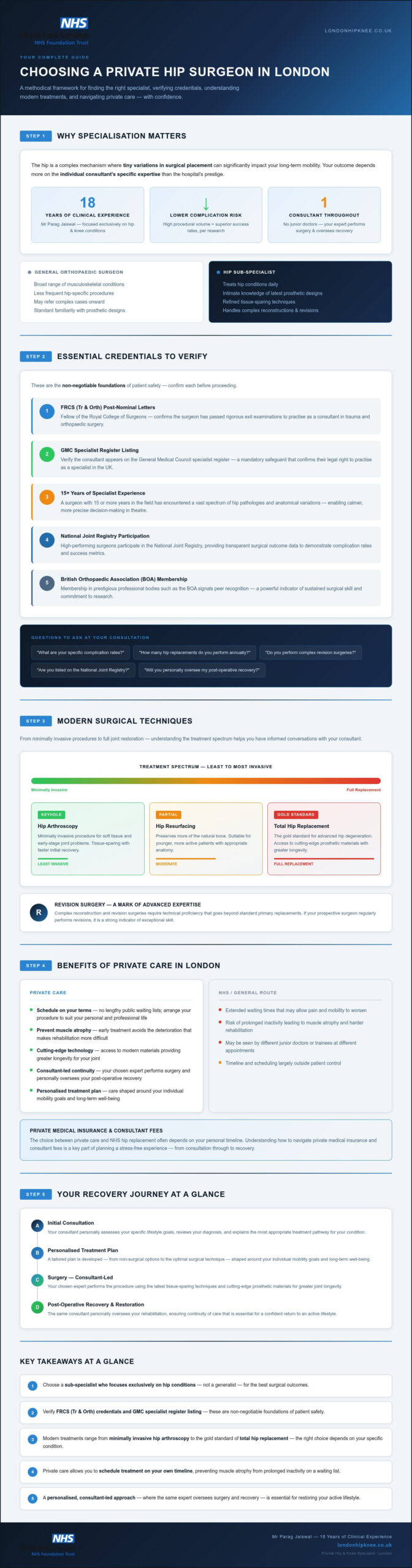
The hip is a complex mechanism where tiny variations in surgical placement can significantly impact your long-term mobility. Sub-specialisation ensures your consultant is intimately familiar with the latest prosthetic designs and tissue-sparing techniques. Surgeons who focus exclusively on hip and knee conditions, such as Mr Parag Jaiswal with his 18 years of clinical experience, develop a refined level of technical skill. Research consistently shows that surgeons with a high procedural volume in specific areas, such as hip replacement surgery, achieve superior success rates and lower complication risks. By choosing a specialist who lives and breathes hip pathology, you’re prioritising both technical excellence and your own clinical safety.
The Benefits of Private Care in London
Opting for private treatment allows you to reclaim control over your health timeline. You don’t have to endure months of deteriorating mobility on a public waiting list; instead, you can schedule your procedure at a time that suits your personal and professional life. This speed is vital because prolonged inactivity can lead to muscle atrophy and a more difficult rehabilitation process. Private care in London also offers access to cutting-edge technology and modern materials that provide greater longevity for your joint. Crucially, the private model ensures a consistent, consultant-led journey. You won’t be passed between different junior doctors or trainees. Your chosen expert will be the one who performs your surgery and personally oversees your post-operative recovery, providing the continuity of care that is essential for a confident return to an active lifestyle.
Essential Credentials and Specialist Expertise to Look For
Identifying a qualified private hip surgeon in London starts with verifying their professional standing. You should look for the post-nominal letters FRCS (Tr & Orth). This signifies that the surgeon is a Fellow of the Royal College of Surgeons and has passed the rigorous exit exams required to practise as a consultant in trauma and orthopaedic surgery. Additionally, ensure they appear on the General Medical Council (GMC) specialist register. Whilst the choice between private care and hip replacement on the NHS often depends on your personal timeline, these credentials remain the non-negotiable foundation of patient safety.
Experience acts as the ultimate guarantor of peace of mind. A surgeon who has spent 15 years or more in the field has likely encountered a vast spectrum of hip pathologies and anatomical variations. This depth of knowledge allows for calmer, more precise decision-making in the operating theatre. Mr Parag Jaiswal, for instance, brings over 18 years of clinical experience to his practice, focusing exclusively on the complexities of the hip and knee. This level of dedication to a specific area of the body ensures that your consultant is not just a generalist, but a true specialist in joint restoration.
Evaluating Surgical Track Records
A transparent surgical track record is a hallmark of a confident expert. Don’t hesitate to ask a prospective consultant about their specific complication rates and success outcomes. High-performing surgeons often participate in the National Joint Registry and hold memberships in prestigious bodies like the British Orthopaedic Association (BOA). Peer recognition is a powerful indicator of skill. If a surgeon regularly performs complex reconstructions or revision surgeries, it demonstrates a level of technical proficiency that goes beyond standard primary replacements. You want a specialist who is not only a practitioner but also a contributor to surgical research, ensuring they remain at the absolute forefront of orthopaedic innovation.
The Personal Touch: Communication and Empathy
Technical skill must be matched by a “Compassionate Expert” persona. Your journey toward recovery is as much about emotional reassurance as it is about physical healing. A great surgeon uses “bridge language” to explain complex radiological findings in a way that relates to your daily discomfort. They should listen intently to your specific lifestyle goals. Whether you aim to return to competitive sport or simply want to walk through a local park without pain, your treatment plan must be tailored to those ends. If you’re ready to discuss your options with a specialist who prioritises this bespoke approach, you can book a consultation to begin your path toward restored mobility.
Modern Surgical Techniques: From Arthroscopy to Replacement
The choice of surgical technique is never a one-size-fits-all decision; it’s a precise clinical response to your specific joint pathology and lifestyle needs. A leading private hip surgeon in London provides a comprehensive suite of options that bridge the gap between conservative management and major reconstruction. Whilst surgery is often the definitive solution, modern orthopaedics prioritises joint preservation whenever possible. This methodical approach ensures that you only undergo the level of intervention necessary to restore your quality of life and personal freedom.
Advanced Hip Arthroscopy and Labral Repair
Keyhole surgery has transformed the way we address hip pain in active adults, particularly those suffering from labral tears or femoroacetabular impingement (FAI). By using small incisions and specialised cameras, a surgeon can repair damaged cartilage and reshape the bone to prevent painful friction. Hip arthroscopy serves as a vital joint-preserving tool that aims to delay or even eliminate the future need for a full replacement in younger, active patients. This technique is particularly effective for treating cam deformities, where the femoral head isn’t perfectly round, causing damage to the joint socket over time. For many, this minimally invasive route offers a faster return to sport without the need for more invasive procedures.
Total Hip Replacement (THR) Innovations
When conservative measures and preservation techniques no longer provide relief, total hip replacement remains the gold standard for restoring pain-free mobility. Adhering to the NICE guidelines for hip replacement ensures that every procedure meets the highest national standards for safety and clinical efficacy. Modern innovations have significantly improved the longevity and feel of these prosthetic joints. Your consultant will develop a customised surgical plan that considers your unique anatomical structure and activity levels.
Key advancements in modern hip replacement include:
- Advanced Bearing Surfaces: The use of ceramic-on-polyethylene materials that offer exceptional durability and reduced wear for active individuals.
- Robotic-Assisted Precision: Utilising technology to allow for the meticulous positioning of components, which can lead to a more “natural” feeling joint.
- Enhanced Recovery Protocols: Clinical pathways designed to reduce pain and get you mobilising safely within hours of your surgery.
Precision is further enhanced through these technological aids, but the surgeon’s experienced hand remains the most critical factor. If you aren’t yet ready for surgery, non-surgical alternatives like Arthrosamid injections can provide an effective first line of defence, offering a bridge to more permanent solutions. A private hip surgeon in London will walk you through these choices with quiet confidence, ensuring you feel supported at every stage of your journey.
Navigating Private Costs, Insurance, and Consultation Logistics
Understanding the financial and administrative landscape of private healthcare is often the final hurdle before you can focus fully on your physical recovery. When you choose a private hip surgeon in London, you’re entering a system designed for efficiency and personalised care, but the logistics can feel daunting if you’re unprepared. A structured approach to these details ensures that your journey remains stress-free. Private fees are generally comprised of three distinct parts: the surgeon’s fee for the procedure and follow-up, the anaesthetist’s fee for pain management, and the hospital’s charges for theatre use and your stay.
The Private Consultation Process
Your journey begins with a comprehensive initial assessment. This appointment is much more than a simple review; it’s a deep dive into your clinical history and current physical limitations. To ensure a productive session, you should bring any previous X-rays or MRI scans you’ve already had performed. Your consultant will conduct a thorough physical examination to see how your hip pain affects your gait and daily range of motion. This is a vital time to discuss the pros and cons of surgical versus non-surgical options in a transparent, one-on-one environment. By the end of this session, you’ll have a bespoke treatment timeline that fits around your professional and personal commitments.
Insurance and Self-Pay Guidance
Whether you’re using private medical insurance or funding the surgery yourself, clarity on the financial pathway is essential. If you have a policy with providers such as Bupa, AXA, or Vitality, the first step is obtaining a pre-authorisation code. This ensures your insurer has approved the specific procedure and the consultant’s fees before you proceed. For those choosing the self-pay route, many hospitals offer all-inclusive packages that provide a single, transparent price for the entire episode of care. Several factors influence the cost of hip replacement, including the complexity of your case and the specific prosthetic materials required for your lifestyle goals. Finding a private hip surgeon in London who prioritises this level of financial transparency helps build the trust necessary for a successful surgical outcome. If you’re ready to move forward with an expert assessment, you can book your initial consultation today to discuss the best path for your joint health.
Personalised Care with Mr Parag Jaiswal at London Hip & Knee Consultant
Choosing a private hip surgeon in London is a decision that impacts your quality of life for years to come. At London Hip & Knee Consultant, the philosophy of care is built upon the belief that technical excellence must be paired with a deep understanding of your individual circumstances. Mr Parag Jaiswal provides a consultant-led service where you are never just a number on a surgical list. Instead, you’re a partner in a clinical process designed to return you to the activities you love. Consultations are available across several of London’s most prestigious private hospitals, ensuring that expert care is accessible and convenient for you.
Recovery is always a collaborative effort. Whilst the surgery itself is a critical milestone, your long-term success relies on a multidisciplinary approach. London Hip & Knee Consultant works closely with a network of specialist physiotherapists who understand the nuances of post-operative rehabilitation. This seamless coordination between surgeon and therapist ensures that your recovery plan is as precise as the surgery itself. By addressing both the mechanical issues of the joint and the functional needs of your body, the practice delivers results that prioritise patient safety and lasting mobility.
A Legacy of Orthopaedic Excellence
With over 18 years of medical experience, Mr Jaiswal has dedicated his career to the mastery of joint restoration. London Hip & Knee Consultant focuses exclusively on adult hip and knee conditions, allowing for a level of sub-specialisation that general orthopaedic clinics cannot match. This dedication means your consultant is intimately familiar with the latest proven techniques, from minimally invasive arthroscopy to complex total hip replacements. Every treatment recommendation is grounded in clinical evidence and a commitment to using modern, high-performance materials that offer the greatest longevity for your joint.
Your Journey to Restored Mobility
Restoring your mobility is the ultimate metric of success. Many patients report a profound sense of relief after years of chronic pain, often returning to sports, gardening, or simply walking without hesitation. The support doesn’t end when you leave the hospital. The London Hip & Knee Consultant team provides long-term follow-up care to monitor your progress and ensure your new joint continues to perform at its best. Taking the first step toward a life without hip pain is a significant move, but you don’t have to navigate it alone. If you’re ready to explore your options with a compassionate expert, you can Contact Mr Parag Jaiswal for an expert consultation and begin your journey to recovery today.
Reclaiming Your Active Future
Selecting the right specialist is the most significant step you’ll take towards ending chronic joint pain. We’ve explored how a surgeon’s specific track record and their commitment to modern techniques, such as minimally invasive hip arthroscopy, are far more critical than a clinic’s postcode. By prioritising a consultant-led model, you ensure your recovery is guided by a consistent expert who understands your unique lifestyle goals and anatomical needs.
Finding a private hip surgeon in London shouldn’t be a source of anxiety. With the right information regarding credentials, surgical options, and financial logistics, you can move forward with quiet confidence. Mr Parag Jaiswal brings over 18 years of specialist experience to every consultation, providing tailored, consultant-led care at some of the city’s leading hospitals. Whether you require a total joint replacement or a joint-preserving procedure, your path to restored mobility starts with an expert assessment.
Don’t let hip pain continue to limit your personal freedom. You can book a consultation with Mr Parag Jaiswal today to discuss a bespoke treatment plan designed for your long-term well-being. Restoration of your active lifestyle is closer than you think.
Frequently Asked Questions
How do I choose the best private hip surgeon in London?
Focus on sub-specialisation and clinical experience when making your choice. Look for a consultant who focuses exclusively on the hip and knee rather than a generalist who treats multiple body areas. Verify credentials like FRCS (Tr & Orth) and check for a high procedural volume in specific techniques like hip replacement. Patient reviews and the ability to consult at prestigious London hospitals are also key indicators of quality.
Do I need a GP referral to see a private hip consultant?
Strictly speaking, you don’t always need a GP referral to book a private consultation, but it’s highly recommended. Most private medical insurers require a GP referral letter before they’ll authorise your initial appointment or diagnostic scans. Even if you’re a self-paying patient, a referral provides your consultant with important medical history. This ensures your assessment is as thorough and safe as possible, allowing for a more accurate diagnosis from the start.
How long is the recovery time after a private hip replacement?
Most patients begin mobilising within hours of surgery and return home within one to three days. Whilst initial wound healing takes about two weeks, a full return to light daily activities usually occurs around six weeks. Achieving complete restoration of strength for high-impact sports can take six months to a year. Your specific timeline depends on your pre-operative health and your commitment to a structured, specialist-led physiotherapy programme during the recovery phase.
Is hip surgery covered by my private medical insurance?
Yes, most major UK insurers such as Bupa, AXA, and Vitality cover hip surgery if it’s deemed medically necessary. You’ll need to obtain a pre-authorisation code from your provider after your initial consultation. This code confirms that they’ll cover the surgeon’s fees, anaesthetist’s costs, and hospital stay. It’s essential to check if your specific policy has any financial limits or excesses before proceeding with your chosen specialist to avoid unexpected costs.
What is the difference between an orthopaedic surgeon and a hip specialist?
An orthopaedic surgeon is a broad term for a doctor who treats the entire musculoskeletal system. A hip specialist, like Mr Parag Jaiswal, is a consultant who has chosen to focus their practice exclusively on hip and knee conditions. This sub-specialisation leads to higher technical precision and a deeper understanding of complex joint pathologies. It’s particularly beneficial for advanced procedures like minimally invasive hip arthroscopy or complex reconstructions where anatomical precision is paramount.
What are the risks of delaying hip replacement surgery?
Delaying necessary surgery can lead to a significant deterioration in your quality of life and physical health. Chronic pain often results in muscle atrophy because you move less, making your eventual post-operative rehabilitation more difficult. Persistent joint friction can also cause further bone loss, potentially complicating the surgical process. Addressing the issue sooner rather than later helps preserve your overall mobility and ensures a faster return to an active lifestyle.
Can I see a private surgeon if I have already started treatment on the NHS?
You’re entitled to seek a private consultation at any stage of your treatment journey, even if you’re already on an NHS waiting list. Many patients choose this route to gain faster access to a specialist diagnosis or to ensure they see a specific private hip surgeon in London for their procedure. Moving to private care allows you to choose your consultant and schedule your surgery at a time that suits your personal commitments.
What should I ask during my first private hip consultation?
You should ask about the surgeon’s specific experience with your condition and their success rates for the recommended procedure. Enquire about the pros and cons of surgical versus non-surgical options, such as specialised injections. It’s also helpful to ask about expected recovery milestones and the type of prosthetic materials they intend to use. A transparent consultant will provide clear, logical answers that help you feel confident in your chosen path to recovery.