

A clicking or catching hip does not, by itself, mean the joint is damaged. If pain during exercise or everyday movement has you searching for labral tear hip symptoms, it is understandable to wonder whether a tear could be the cause. Groin pain, stiffness and clicking can fit the pattern, but they can also occur with other hip problems. Symptoms alone cannot confirm a diagnosis.
A careful assessment can help relate what you feel to the findings from a physical examination and, where appropriate, imaging. A labral tear may be present without causing symptoms, so scan results also need to be considered in context.
This guide explains common signs of a hip labral tear, what else may cause similar pain and when an assessment or imaging may be useful. It also outlines practical next steps and treatment approaches, from activity adjustments and guided physiotherapy to hip arthroscopy in selected cases. The aim is to help you understand what your symptoms might mean without mistaking a possible pattern for a diagnosis.
Key Takeaways
- Learn what the acetabular labrum does and which labral tear hip symptoms may warrant further assessment.
- Notice whether activities involving hip bending or turning affect your symptoms, and make a note to discuss the pattern with a clinician.
- Understand why similar pain can come from different hip or referred conditions, so symptoms alone cannot confirm a tear.
- Know when persistent, worsening or activity-limiting pain is a reason to arrange an assessment.
- Explore how treatment may be tailored to your symptoms and clinical findings, from activity adjustments and guided physiotherapy to possible surgery in selected cases.
What do labral tear hip symptoms usually feel like?
Hip or groin pain can have several causes, and discomfort in this area does not automatically mean you have a labral tear. The acetabular labrum is a ring of cartilage around the rim of the hip socket. It helps deepen the socket and support the joint. You can read more about the acetabular labrum and its anatomy.
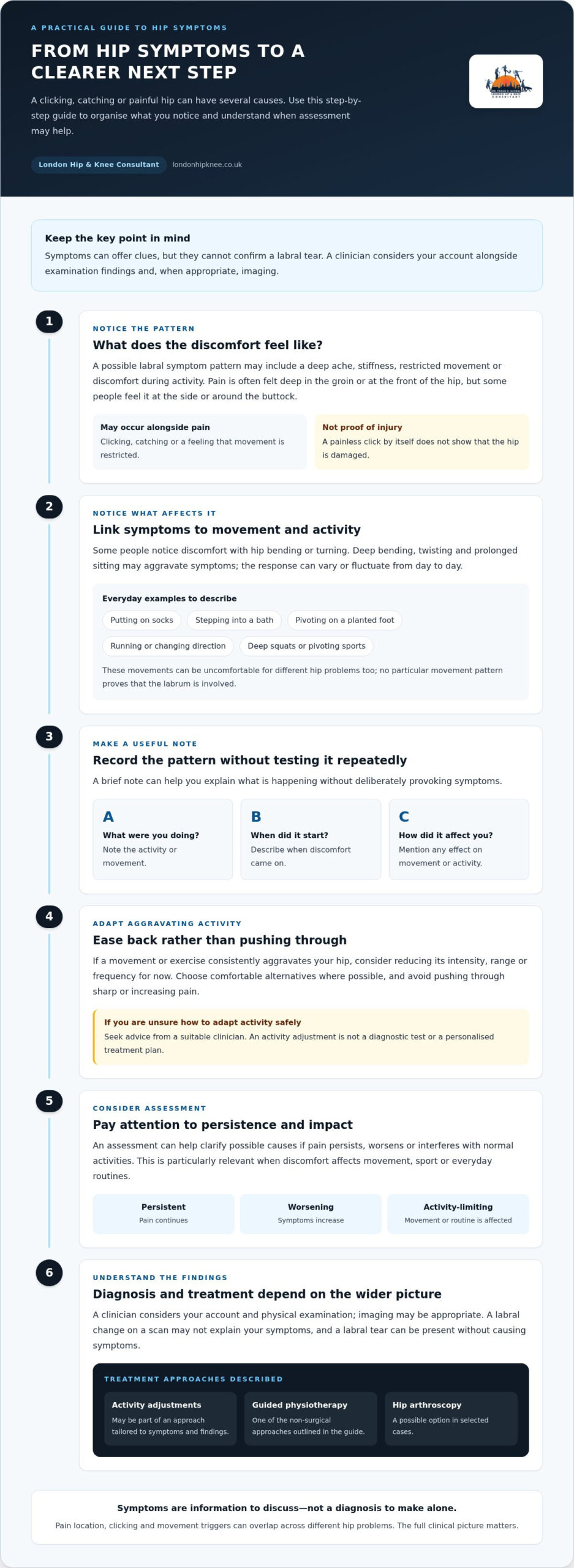
In brief: labral tear symptoms are clues about how your hip feels, not proof of what is causing the pain. They may include a deep ache, stiffness, restricted movement or discomfort during activity. Some people notice symptoms more when the hip is bent or turned, while others find that pain comes and goes. There is no single symptom pattern that confirms a tear.
Where is labral tear pain commonly felt?
Discomfort is often felt deep in the groin or at the front of the hip. Some people describe pain at the side of the hip or around the buttock instead. The area where you feel pain is useful to mention during an assessment, but it cannot identify the affected structure on its own. Muscles, tendons, the hip joint and pain referred from elsewhere may produce overlapping patterns.
Can clicking, catching, or stiffness be symptoms?
Clicking, catching or a feeling that movement is restricted can occur alongside hip pain. However, a painless click is not, by itself, evidence of injury. Consider the whole pattern: whether movement is painful, whether it limits everyday activities and how it relates to your history. Note when symptoms happen and what affects them, rather than trying to diagnose the cause from a sound or sensation alone.
The phrase labral tear hip symptoms describes a possible pattern, not a diagnosis. A clinician considers your account alongside a physical examination and, when appropriate, imaging. This context matters because a labral change on a scan may not explain the symptoms you are experiencing. If pain persists, worsens or interferes with normal activities, an assessment can help clarify possible causes and whether further investigation is appropriate.
How can a hip labral tear affect movement and everyday activities?
Hip movement involves bending, rotation and repeated loading, so discomfort may become more noticeable during certain activities or after you have been active for a while. For example, you might feel symptoms when putting on socks, stepping into a bath or pivoting on a planted foot. These examples can help you describe what is happening, but they cannot confirm a labral tear. Other hip problems can also be aggravated by similar movements.
Which movements may aggravate labral tear hip symptoms?
Deep bending, twisting and prolonged sitting may bring on discomfort for some people. These positions involve hip flexion or rotation, and the response varies: symptoms may settle quickly, build during activity or fluctuate from day to day. Mayo Clinic’s overview of Hip labral tear symptoms also describes pain associated with activity. No particular movement pattern proves that the labrum is involved.
Rather than repeatedly testing a painful movement, keep a brief note of what you were doing, when discomfort started and how it affected you. This gives a clinician a clearer picture without deliberately provoking symptoms.
How might symptoms affect sport and daily routines?
Running, changing direction, deep squats or sports involving pivoting and repeated hip movement may be uncomfortable. You might find it harder to complete a session or move with your usual confidence, even if you can still walk and manage routine tasks. The impact can range from occasional irritation to a significant limit on sport or everyday activities.
If a particular exercise or movement consistently aggravates your hip, consider reducing its intensity, range or frequency for now. Choose comfortable alternatives where possible, and avoid pushing through sharp or increasing pain. This is a practical adjustment, not a treatment plan or diagnostic test. If you are unsure how to adapt activity safely, seek advice from a suitable clinician.
Patterns in your labral tear hip symptoms can help guide an assessment, but diagnosis depends on the wider clinical picture. If discomfort is affecting your movement or activities, you could explore a specialist hip assessment to discuss your concerns and appropriate next steps.
How can you tell a labral tear from other causes of hip pain?
Similar hip or groin pain can come from different structures. A labral problem may cause discomfort within the joint, but tendons and other tissues around the hip can also hurt, and pain may sometimes be referred from elsewhere. Stiffness or pain with movement does not distinguish these causes on its own. The Mayo Clinic overview of hip labral tears describes symptoms that can overlap with other hip concerns, which is one reason self-diagnosis is unreliable.
Why do hip labral symptoms overlap with other conditions?
The hip is a complex joint, and nearby tendons and muscles work together as you move. Irritation in different tissues can therefore be felt in a similar area or during similar activities. Femoroacetabular impingement, a difference in the shape of the hip bones that can affect how they meet during movement, may coexist with or contribute to labral problems. But neither a particular pain location nor one uncomfortable movement establishes the cause.
Patterns are still useful to describe. Tell a clinician where you feel discomfort, what brings it on and how it affects your movement. This information helps guide an assessment, but it should not be used as a checklist to diagnose a tear, tendon problem or impingement yourself.
Does an imaging finding always mean the labrum causes pain?
No. An MRI may show a change in the labrum, but the finding needs to be considered alongside your symptoms and examination. The key question is whether the scan result fits your experience, including where and when you feel pain and what the clinician finds when assessing your hip. A scan alone cannot explain every symptom or determine the right treatment.
A hip diagnosis is made by bringing your symptoms, examination findings and imaging together, not by relying on any one of them in isolation. If your labral tear hip symptoms are persistent or limiting, a specialist assessment can help establish whether a labral finding is relevant or whether another cause needs consideration.
What should you do if you recognise labral tear hip symptoms?
Noticing a possible pattern does not mean you need to identify the cause yourself. If hip pain is persistent, worsening or limiting your usual activities, discuss it with a suitable clinician. A clear account of what you are experiencing can help guide the next steps.
- Note your symptoms. Record when they began, where you feel them and what tends to aggravate or ease them. Include any effect on walking, sleep, work, exercise or other daily activities.
- Arrange an assessment. A clinician can review your symptoms and medical history, then examine your hip. The findings help determine whether imaging may be useful.
- Follow individual advice. Recommendations depend on your assessment and circumstances. Ask about any suggested investigations or activity changes, and follow the plan agreed with your clinician.
What information should you prepare for an appointment?
A few notes can make it easier to explain how the problem affects you. Mention any previous hip injury, recent change in activity or movement that tends to trigger discomfort. If symptoms disturb your sleep or make everyday tasks harder, include that too. Bring relevant previous imaging or reports if you have them, but do not arrange a scan solely to prepare for the appointment.
How might a clinician assess suspected labral symptoms?
Assessment usually begins with questions about your symptoms, health and activity, followed by a physical examination. This may help the clinician understand how your hip moves and whether particular movements reproduce discomfort. Examination findings are considered alongside your history, rather than used alone to confirm a labral tear.
MRI or other imaging may be considered if it could help clarify the cause or inform treatment. The appropriate scan depends on the clinical picture, and its results need to be interpreted in context. A finding on an image does not automatically explain pain, so the clinician will consider whether it fits your symptoms and examination.
Seek urgent medical assessment for severe, sudden hip pain, inability to bear weight, fever with hip symptoms or significant injury. These signs need prompt attention rather than a routine appointment.
If you are concerned about persistent labral tear hip symptoms, consider arranging a specialist hip assessment to discuss your symptoms and appropriate next steps.
What happens after a suspected hip labral tear diagnosis?
A scan or a set of symptoms does not determine treatment on its own. The next step is to consider how your hip feels and functions alongside examination and imaging findings, your usual activities and what you hope to get back to. Two people with similar scan results may need different plans.
Treatment is individual, and a suspected labral tear does not mean surgery is inevitable. For some people, care may begin with adjusting activities that aggravate symptoms and following a clinician-guided physiotherapy plan. This may focus on building strength and improving movement in a way that suits your hip and goals. Your clinician can help you decide what to modify and how to progress, rather than relying on a generic exercise routine.
Can a hip labral tear improve without surgery?
Management may start without an operation, depending on your assessment and how much symptoms affect daily life. Activity changes and tailored physiotherapy may help manage discomfort and support function, although recovery and response vary between individuals. Follow up with your clinician if pain continues, worsens or your movement is not improving as expected. Your plan can then be reviewed in light of your progress and any further findings.
When might hip arthroscopy be discussed?
A specialist may discuss hip arthroscopy in selected cases if symptoms remain troublesome and the clinical findings support considering surgery. It is a procedure performed through small incisions to assess and treat problems inside the hip joint. Whether it is appropriate depends on the whole clinical picture, not simply the presence of a labral finding on a scan. Your specialist should explain the potential benefits, limitations and other options before you make a decision.
If you are in London and ongoing labral tear hip symptoms are affecting your activities, a specialist assessment can help relate your symptoms to examination and imaging findings and discuss suitable options. Mr Parag Jaiswal, a Consultant Orthopaedic Surgeon with over 18 years as a medical professional, focuses on adult hip and knee care. Hip arthroscopy is among the practice’s listed services, but it may be considered only where appropriate after clinical assessment.
Take a confident next step for your hip
Hip or groin pain, stiffness and clicking can be associated with a labral tear, but they do not confirm one. Similar symptoms can have other causes, so a useful next step is to describe how your hip feels and how it affects movement to a suitable clinician. Assessment brings your symptoms together with examination findings and, where appropriate, imaging.
Treatment is guided by the individual picture. Activity adjustments and clinician-guided physiotherapy may be considered, while hip arthroscopy is an option only for selected cases after assessment. Recognising labral tear hip symptoms can help you know when to seek advice, but it does not mean surgery is inevitable.
London Hip & Knee Consultant focuses on adult hip and knee conditions. Mr Parag Jaiswal has over 18 years of medical experience, and hip arthroscopy is among the practice’s listed services. Explore hip assessment options with London Hip & Knee Consultant to discuss your concerns and possible next steps.
With a clearer understanding of what may be causing your symptoms, you can work towards an informed plan at a pace that suits your needs.
Frequently Asked Questions
Is groin pain always a sign of a hip labral tear?
No. Groin pain can come from several structures around the hip, so its location alone cannot identify the cause. A labral tear is one possibility, particularly if discomfort occurs with certain movements, but other conditions can feel similar. A clinician considers your history and examination, and may recommend imaging if appropriate. Seek advice if the pain persists, worsens or interferes with everyday activities.
Can a hip labral tear cause clicking or catching?
It can be associated with clicking, catching or a feeling that movement is restricted, but these symptoms are not specific to a labral tear. Painless clicking can also occur and does not automatically mean the joint is damaged. The overall pattern matters, including whether clicking comes with pain or reduced function. A clinician can consider these details alongside your history and examination rather than relying on the sound alone.
What are the most common labral tear hip symptoms?
Commonly described labral tear hip symptoms include deep groin or hip pain, stiffness, restricted movement and discomfort during activities involving bending or rotation. Some people also notice clicking or catching. Symptoms vary, and none confirms a tear on its own. Other hip problems may cause similar feelings, so consider discussing persistent or limiting symptoms with a suitable healthcare professional rather than trying to diagnose the cause yourself.
How is a hip labral tear diagnosed?
Assessment usually begins with a discussion of your symptoms and a physical examination. Depending on what the clinician finds, imaging such as an MRI may be considered. A scan must be interpreted alongside your symptoms and examination, because an image alone cannot establish what is causing pain. The appropriate investigation depends on your individual situation, and your clinician can explain why it may or may not be useful.
Can a hip labral tear heal without surgery?
Not everyone with suspected or confirmed labral damage needs an operation. Depending on your symptoms and assessment, management may include adjusting activities that aggravate discomfort and clinician-guided physiotherapy. The right approach depends on the individual and what is causing the symptoms, and improvement cannot be guaranteed. If pain continues or affects daily function, arrange further clinical advice so your situation and options can be reviewed.
What should I do if my hip pain suddenly becomes severe?
Seek urgent medical assessment if severe hip pain starts suddenly, you cannot bear weight, you have a fever or the symptoms follow a significant injury. These signs need prompt attention and should not be assumed to indicate a labral tear. For ongoing discomfort that is not urgent, contact an appropriate healthcare professional to discuss your symptoms, how they affect movement and what assessment or next steps may be suitable.
When should I see a hip specialist in London for possible labral tear symptoms?
Consider seeking an assessment if hip or groin pain persists, worsens, restricts movement or repeatedly returns during activity. A specialist can review your symptoms and consider whether examination or imaging is appropriate. London Hip & Knee Consultant focuses on adult hip and knee conditions, and Mr Parag Jaiswal has over 18 years of medical experience. You do not need to decide beforehand that you have a tear or need surgery.