

What if the real price of delaying your hip replacement isn’t found on a hospital invoice, but in the months of mobility you’re losing to persistent, grinding pain? If you’ve found yourself awake in the early hours because of a throbbing joint or struggling to maintain your professional pace, you aren’t alone. It’s entirely understandable to feel hesitant when faced with the often opaque nature of private medical pricing. Navigating the thr surgery cost in a city like London often feels like a search for clarity amongst a sea of hidden fees and clinical jargon.
You deserve a transparent breakdown that respects both your health and your financial peace of mind. This article will provide a clear understanding of what a comprehensive surgical package entails, from consultant expertise to the quality and longevity of the prosthetics used. By the end, you’ll have the confidence to choose a path that doesn’t just address the immediate discomfort, but secures your physical freedom for decades to come. We’ll explore fee structures, the value of specialist-led care, and the predictable journey toward a life without limits.
Key Takeaways
- Gain a transparent understanding of the total thr surgery cost in London, ensuring you know exactly what is included in both hospital and consultant fees.
- Compare the significant differences in waiting times between private care and the NHS to help you make an informed decision and regain your mobility sooner.
- Discover the clinical benefits of consultant-led care, where you receive consistent support from the same specialist from your initial assessment through to post-operative recovery.
- Learn how to navigate various funding pathways, including fixed-price self-pay packages and private medical insurance, to find the best value for your long-term health.
- Identify why bespoke surgical planning and modern techniques are essential for the long-term success and longevity of your new hip joint.
Understanding Total Hip Replacement (THR) Surgery Costs in the UK
A Hip replacement, formally known as a total hip replacement (THR), is a sophisticated orthopaedic procedure designed to restore mobility by replacing a damaged femoral head and acetabulum with high-performance artificial components. For many individuals, the decision to investigate the thr surgery cost in London isn’t purely a financial consideration; it’s a proactive step toward reclaiming a life that has been increasingly narrowed by chronic pain. While the NHS provides vital care, the 2026 healthcare landscape sees a growing number of patients seeking the precision and predictability of private orthopaedics to avoid the physical decline associated with long waiting periods.
Current pricing in the private sector reflects significant advancements in medical technology. Modern surgical pathways now frequently incorporate robotic-assisted techniques and the use of advanced material science in prosthetics, which offer greater longevity and more natural movement. However, it’s vital to distinguish between standard “self-pay” hospital packages and a bespoke “consultant-led” approach. The latter ensures you’re treated by a seasoned specialist who manages every nuance of your care, from the initial diagnostic imaging to the final post-operative review, rather than being managed by a rotating clinical team.
The Clinical Necessity of THR
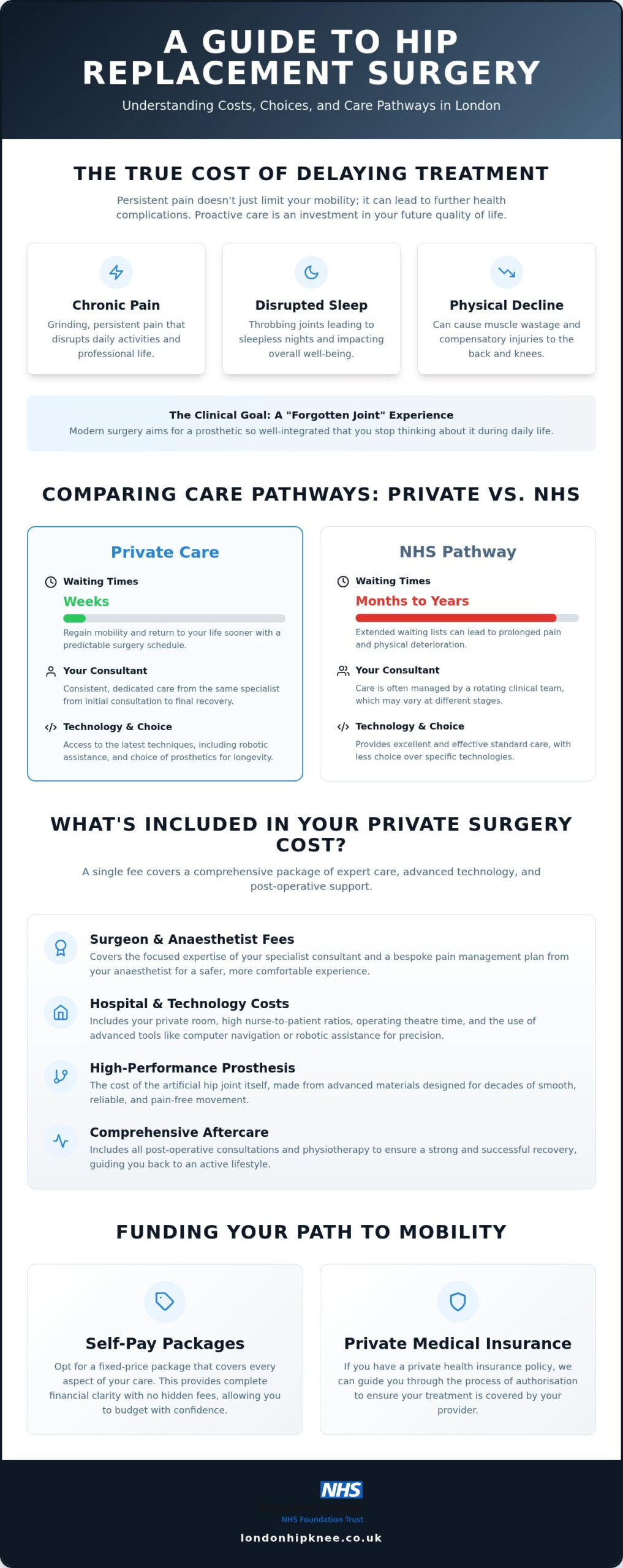
Hip pain often begins as a background nuisance, but it quickly transitions to a surgical necessity when it interferes with basic functions like sleep, work, or simple walking. Delaying the procedure doesn’t just prolong your discomfort; it can lead to significant muscle wastage and compensatory injuries in the back or opposite knee. If you are uncertain whether your symptoms have reached this threshold, understanding the signs you need a hip replacement can help you determine whether it’s time to move beyond conservative treatments. Modern surgery aims for what clinicians call a “forgotten joint” experience. This means the prosthetic becomes so well-integrated and the movement so fluid that you eventually stop thinking about your hip altogether during daily activities.
The Shift Toward Private Orthopaedics
The choice to move away from public health pathways is frequently driven by the emotional and physical toll of extended waiting lists. Patients often face months or even years of uncertainty, during which their mobility and general health continue to deteriorate. Choosing private care allows you to select your specific consultant and secure a surgery date that fits your personal and professional commitments. This level of control provides a structured, predictable recovery timeline, significantly reducing the anxiety that naturally accompanies major surgery. In London’s centres of excellence, the focus remains on bespoke surgical planning, ensuring that your path to restoration is as efficient and effective as possible.
Breaking Down the Components of Private THR Fees
When you receive a quote for surgery, it often appears as a single, all-encompassing figure. However, the thr surgery cost is actually a composite of several distinct clinical and administrative parts that ensure your safety and the success of the procedure. Understanding these layers helps you see the value in expert-led care rather than viewing the operation as a simple commodity. The total Cost of private hip replacement surgery in London reflects the calibre of the team and the technology used to restore your mobility.
The Surgeon and Anaesthetist Professional Fees
A specialist hip consultant brings years of focused expertise to your case, which is reflected in their professional fee. This isn’t just a payment for the time spent in the operating theatre; it’s an investment in their track record and clinical judgement. Similarly, the anaesthetist plays a vital role in your safety and comfort. They don’t simply administer sedation; they design a bespoke pain management plan that facilitates early mobilisation, which is essential for a successful recovery. Pre-operative assessments are also included in this phase to ensure you’re medically fit for the journey ahead.
Hospital Costs and Theatre Technology
Premium London hospitals offer more than just a private room and a comfortable stay. You’re paying for high nursing ratios, which ensure that help is always at hand during those critical first 24 hours. The hospital fee also covers theatre time and the use of advanced technology. For example, using robotic assistance or computer-aided navigation can increase the initial thr surgery cost, but these tools offer unparalleled precision in implant placement. Your stay also includes essential pharmacy supplies, diagnostic X-rays, and blood tests to monitor your immediate post-operative health.
Prosthetic Quality and Longevity
The implant itself is a major variable in the overall pricing. While budget options exist, most specialists favour ceramic-on-polyethylene or ceramic-on-ceramic materials for their superior durability and lower wear rates. The Orthopaedic Data Evaluation Panel (ODEP) rating provides a clear, evidence-based score that reflects how well an implant has performed in patients over a period of up to 15 years. Investing in a high-quality prosthetic with a strong ODEP rating significantly reduces the risk of needing complex revision surgery in the future. If you’re unsure which pathway suits your clinical needs, discussing your options during a consultant-led hip replacement assessment can provide the clarity you need to move forward with confidence.
Comparing Private Hip Surgery vs. NHS Care Pathways
Choosing between public and private healthcare is a significant decision for anyone facing a hip replacement. Whilst the NHS provides vital emergency care, the pathway for elective procedures often involves prolonged periods of physical limitation and uncertainty. When evaluating the thr surgery cost, it’s essential to consider the value of time and the impact of surgeon continuity on your long-term clinical results. In the private sector, the timeline from your initial consultation to the operating theatre is typically measured in weeks, whereas NHS waiting lists for orthopaedic surgery can extend into months or even years.
Surgeon continuity is perhaps the most significant advantage of private care. You’ll meet your consultant at every stage of the journey, from the first diagnostic assessment to the final post-operative review. This ensures your surgeon has a deep understanding of your specific anatomy and lifestyle goals, which is rarely possible in a system where you might see a different clinician at each appointment. The private route also allows for a bespoke selection of implants. Instead of a standard model, your specialist can choose a prosthetic specifically suited to your age and intended activity level. This precision is matched by intensive, immediate access to physiotherapy. This early intervention is vital for hitting recovery milestones and ensuring the joint settles correctly.
The “Hidden” Benefits of Private Care
A consultant-led practice focuses entirely on your individual lifestyle goals. Whether you’re aiming to return to the golf course or simply want to walk the dog without discomfort, your recovery plan is tailored to those specific ends. You also benefit from direct access to your surgical team for any post-operative questions. This provides peace of mind whilst you heal in the privacy and comfort of a dedicated hospital suite. Having a single point of contact reduces the anxiety often associated with the recovery process.
Clinical Outcomes and Revision Rates
Evidence suggests that consultant-led care often correlates with lower complication rates. By tracking data through the National Joint Registry, private specialists maintain high standards of precision medicine. This approach moves away from a “one-size-fits-all” model, focusing instead on techniques that minimise infection risks and improve joint longevity. The investment in thr surgery cost ultimately pays dividends by reducing the likelihood of needing complex revision surgery in the future. Specialist surgeons often have higher volumes of these specific procedures, which is a known factor in improving patient outcomes and reducing the risk of dislocation.
Funding Options: Self-Pay, Insurance, and Value for Money
Understanding the financial commitment of private healthcare is as vital as understanding the clinical procedure itself. While the thr surgery cost represents a significant investment, most patients find that the return on their mobility and independence far outweighs the initial expense. Whether you’re accessing treatment through private medical insurance or choosing a self-funded route, clarity on what you’re paying for ensures there are no surprises during your recovery journey. Viewing this as an investment in your future quality of life helps frame the decision-making process around long-term value rather than just the immediate price.
Navigating Private Medical Insurance
If you have a policy with providers like Bupa, AXA, or Vitality, the process typically begins with obtaining a referral from your GP. It’s crucial to understand the distinction between “fee-assured” consultants and those who may have a shortfall. Fee-assured specialists agree to work within the specific limits set by your insurer, meaning you won’t face unexpected bills for the surgeon’s time. Once you have your clinical recommendation, you must obtain a pre-authorisation code from your insurer before the surgery date. Always check the fine print for outpatient physiotherapy limits; some policies only cover a set number of sessions, which might be fewer than your specialist recommends for an optimal outcome.
Self-Funding and Finance Plans
For those without insurance, “fixed-price” packages offer a predictable way to manage the thr surgery cost. These quotes generally include the surgeon and anaesthetist fees, the hospital stay, and the prosthetic itself. However, it’s essential to clarify what happens if complications arise. Many premium London hospitals include a “re-admission” clause that covers care for a specific period post-surgery, providing an extra layer of financial security. To make this investment more accessible, many patients utilise finance plans. Spreading the cost over 12 to 60 months, often with 0% interest options for the first year, allows you to proceed with surgery now rather than waiting for your condition to worsen whilst saving the full amount.
When calculating the value of surgery, consider the ROI of mobility. Returning to a professional role sooner or avoiding the need for expensive social care at home provides a tangible financial benefit. More importantly, the ability to sleep through the night and walk without pain is a restoration of personal freedom that is difficult to quantify. If you’re ready to discuss your options, you can book a consultation to receive a bespoke assessment and a clear breakdown of the next steps for your hip health.
Why London Hip & Knee Consultant is the Right Choice
Selecting the right surgeon is perhaps the most critical decision in your orthopaedic journey. Whilst many corporate hospital groups promote their brand, your outcome depends entirely on the skill and clinical judgement of the person holding the scalpel. Choosing a specialist like Mr Parag Jaiswal ensures that your thr surgery cost is an investment in over 18 years of medical expertise and a practice dedicated exclusively to hip and knee reconstruction. This focused approach allows for a level of precision that generalist surgeons simply cannot match, particularly when dealing with complex joint restoration.
Your path to recovery begins with bespoke surgical planning. We don’t believe in a one-size-fits-all methodology; instead, we utilise the latest diagnostic imaging and modern techniques to map out your procedure with meticulous detail. This planning is supported by a multidisciplinary team of top-tier anaesthetists and physiotherapists across London, all working in unison to prioritise your safety and long-term well-being. By combining technical excellence with empathetic communication, we ensure you have realistic expectations and a clear, supported path back to your favourite activities.
A Consultant-Led Journey from First Visit to Full Recovery
The initial consultation serves as the foundation for your entire surgical strategy. It’s during this one-on-one time that Mr Jaiswal listens to your concerns, assesses your unique anatomy, and defines the most effective approach for your lifestyle. This continuity of care doesn’t end in the operating theatre. We organise a structured follow-up programme to monitor the success of your prosthetic and ensure your rehabilitation is progressing as expected. Our patients often share how this personal connection provided the confidence they needed to return to sports, gardening, and active family life without the shadow of chronic pain.
Accessing Care Across London’s Premier Facilities
We understand that convenience is a vital factor in your rehabilitation. By offering access to multiple premium hospital sites across the capital, we ensure you can receive treatment in a centre of excellence that is most accessible for you. Every partner facility maintains the highest clinical standards, providing the modern technology and nursing care required for a smooth inpatient stay. If you’re ready to move beyond the limitations of hip pain and want a transparent understanding of the thr surgery cost for your specific case, the next step is a professional assessment. Book your specialist THR consultation with Mr Parag Jaiswal today to begin your journey toward pain-free mobility.
Taking the Next Step Toward Lasting Restoration
Navigating the various factors that influence the thr surgery cost is a vital part of your journey toward reclaiming a life without chronic pain. By choosing a private, consultant-led pathway, you’re prioritising surgical precision and a predictable timeline for your recovery. This investment ensures you receive high-quality prosthetics and consistent care from a dedicated specialist, rather than navigating the uncertainty of a rotating clinical team. You now have the clarity needed to choose a path that values your long-term mobility and professional freedom.
Mr Parag Jaiswal brings over 18 years of medical expertise to every procedure, specialising exclusively in adult hip and knee reconstruction. With access to multiple centres of excellence across London, you can receive treatment in a facility that best supports your specific rehabilitation needs. Every aspect of our care is designed to provide a steady, reliable guide through your surgical experience, ensuring you feel heard and respected at every stage.
If you’re ready to move forward with confidence, Enquire about THR Surgery Costs and Consultations today. Your journey toward pain-free mobility is within reach, and we’re here to support you through every step of this life-changing transition.
Frequently Asked Questions
How much does a private hip replacement cost in the UK on average?
The average cost of a private total hip replacement in the UK is approximately £14,412, though prices typically range from £11,000 to £17,000 depending on the region and facility. When calculating the total thr surgery cost, it’s important to recognise that these figures represent industry averages for 2026. Choosing a specialist practice in London often falls at the higher end of this spectrum due to the concentration of clinical expertise and the use of premium prosthetics.
Is a total hip replacement (THR) covered by Bupa or AXA insurance?
Most major UK providers, including Bupa, AXA, and Vitality, provide comprehensive coverage for a total hip replacement (THR). You’ll typically need a GP referral and a pre-authorisation code from your insurer before proceeding with your consultant. It’s advisable to check if your specialist is “fee-assured” to avoid any unexpected shortfalls. Your policy details will also confirm whether outpatient physiotherapy and follow-up consultations are fully covered or subject to a specific financial limit.
What is included in a private hip surgery package price?
A private hip surgery package usually provides a fixed-price arrangement that covers the surgeon’s fee, the anaesthetist’s professional fee, and the hospital’s charges for theatre time and nursing care. It also includes the cost of the prosthetic implant and your inpatient stay. Whilst most packages include an initial post-operative physiotherapy session and a follow-up consultation, you should always verify whether diagnostic scans or pharmacy costs are included in the initial quote you receive.
Are there extra costs for robotic-assisted hip replacement?
Utilising robotic-assisted technology often incurs an additional fee compared to traditional manual techniques. This reflects the cost of the advanced software, specialised disposables, and the sophisticated imaging required for robotic mapping. Whilst this can increase the initial thr surgery cost, many patients find the investment worthwhile for the enhanced precision in implant placement. This accuracy can lead to improved joint longevity and a more natural feeling during daily movement and physical activity.
Can I pay for my hip surgery in monthly instalments?
Yes, many private hospitals and specialist practices offer flexible financing to help you manage the expense of surgery. Options typically include 0% interest plans for the first 12 months or longer-term payment schedules extending up to 60 months. These arrangements allow you to proceed with your hip replacement without delay, avoiding the physical deterioration that often occurs whilst waiting on public health lists or saving for a lump-sum payment.
What happens if I need a revision surgery later—is that covered?
Revision surgery is generally covered by private health insurance if it is clinically necessary due to wear or complications. For self-paying patients, most fixed-price packages include a specific “re-admission” window, often 30 days, to cover complications immediately following the initial procedure. However, a planned revision decades later would typically be treated as a new clinical episode. It’s vital to choose high-quality implants initially to minimise the long-term risk of needing a second operation.
Does the cost include post-operative physiotherapy and follow-up appointments?
Most private surgical packages include your first follow-up appointment and a baseline level of inpatient physiotherapy to ensure you can mobilise safely before discharge. However, extended post-operative rehabilitation and long-term follow-up schedules are often billed separately or subject to insurance limits. It’s important to discuss your specific recovery needs with your consultant early on, as intensive physiotherapy is often the key to achieving a “forgotten joint” experience and returning to sports.
Why is the cost of THR higher in London compared to other UK regions?
The cost of surgery in London is typically 20% to 35% higher than in other UK regions due to significantly higher hospital operating costs and property values. Patients choosing London-based care are also paying for access to world-class centres of excellence and highly specialised consultants. These facilities often invest more heavily in the latest robotic technology and senior nursing staff, ensuring a level of clinical precision and personal attention that justifies the regional price difference. Before committing to surgery, many patients find it helpful to review the key signs you need a hip replacement to confirm that surgery is the right next step for their specific clinical situation.