

Could the persistent discomfort in knee joint you feel during a morning walk be a manageable signal rather than an inevitable sign of ageing? For many, this nagging sensation creates a growing sense of anxiety, sparking fears that a total knee replacement is the only way to regain a sense of normalcy. It’s exhausting to miss out on your favourite sport or find yourself cutting walks short because you’re unsure if you’re causing further damage. You deserve a path forward that doesn’t involve a cabinet full of painkillers or confusing, contradictory advice about various injection therapies.
We understand how vital your mobility is to your quality of life and your sense of freedom. This guide will help you identify the underlying cause of your symptoms and introduce you to the most effective modern treatments currently available through London Hip & Knee Consultant. You’ll learn about precision diagnostic techniques and advanced options such as Arthrosamid injections and minimally invasive surgery. By the end of this article, you’ll have the clarity needed to seek a definitive diagnosis and begin a journey back to the active lifestyle you enjoy, free from the limitations of joint pain.
Key Takeaways
- Understand that persistent discomfort in knee joint is often a biological signal involving the synovial membrane, requiring a different diagnostic approach than an acute injury.
- Learn how to distinguish between mechanical issues, such as meniscus tears, and degenerative wear to ensure you receive the most appropriate path for recovery.
- Discover a structured 14-day method for assessing your symptoms at home, which helps you identify specific pain triggers like stairs, squatting, or resting.
- Explore the progressive “treatment ladder” that prioritises physiotherapy and modern non-surgical options, such as Arthrosamid injections, before considering surgery.
- Find out how to access expert orthopaedic consultations and advanced diagnostics in London to secure a clear diagnosis without the stress of long waiting lists.
Identifying the Nature of Discomfort in the Knee Joint
Many patients describe a persistent sense of unease rather than a sudden, debilitating injury. Unlike acute traumatic pain, which typically follows a specific fall or impact, discomfort in knee joint often develops gradually over months or years. This subtle onset can be deceptive, leading many to dismiss it as a natural part of ageing. However, your knee is a complex mechanism where the cartilage provides a smooth gliding surface and the synovial membrane produces lubricating fluid. When these components are compromised, even routine movements like climbing stairs or walking on uneven ground can trigger a noticeable reaction. Knee discomfort serves as a critical early warning sign, acting as a precursor to potential structural joint changes that may require specialist intervention if left unaddressed. Understanding the nuances of knee joint discomfort and anatomy is the first step toward regaining your mobility.
Differentiating Ache from Sharp Mechanical Pain
The type of sensation you experience provides vital clues about the underlying pathology. A deep, dull ache that worsens after a long day of activity often points toward early-stage osteoarthritis or repetitive overuse. In contrast, sharp, catching sensations are more characteristic of mechanical issues, such as a meniscus tear or a “loose body” of bone or cartilage floating within the joint. If you find your knee “locking” in place or feel it “giving way” during a simple turn, these are significant clinical indicators. They suggest that a structural fragment might be interfering with the joint’s natural hinge movement, requiring a more focused diagnostic approach.
The Impact of Swelling and Stiffness
Swelling, or “effusion,” occurs when the joint produces excess fluid in response to irritation or injury. This can make the knee feel heavy or tight, limiting your ability to bend or straighten the leg fully. You might notice morning stiffness that eases after twenty minutes of movement, which is common in inflammatory conditions. Alternatively, you may experience the “theatre sign,” where stiffness and discomfort in knee joint intensify after sitting for a prolonged period, such as in a cinema or during a long flight. Persistent inflammation doesn’t just cause temporary pain; it can gradually erode joint function and reduce your overall range of motion. Addressing these symptoms early allows for a broader range of conservative treatments before structural damage becomes irreversible.
Common Causes: From Meniscus Tears to Osteoarthritis
Determining the source of discomfort in knee joint requires a clear distinction between mechanical disruptions and progressive degenerative wear. Whilst a sudden twist on the football pitch might cause an immediate tear, many adults find their symptoms emerge without a single identifiable event. Understanding the various causes and treatment pathways for knee pain is essential for choosing the right intervention. Often, what feels like a minor ache is actually the cumulative result of previous sports injuries that have subtly altered the joint’s biomechanics over several decades.
Mechanical Issues: Meniscus and ACL Damage
Degenerative Changes and Cartilage Wear
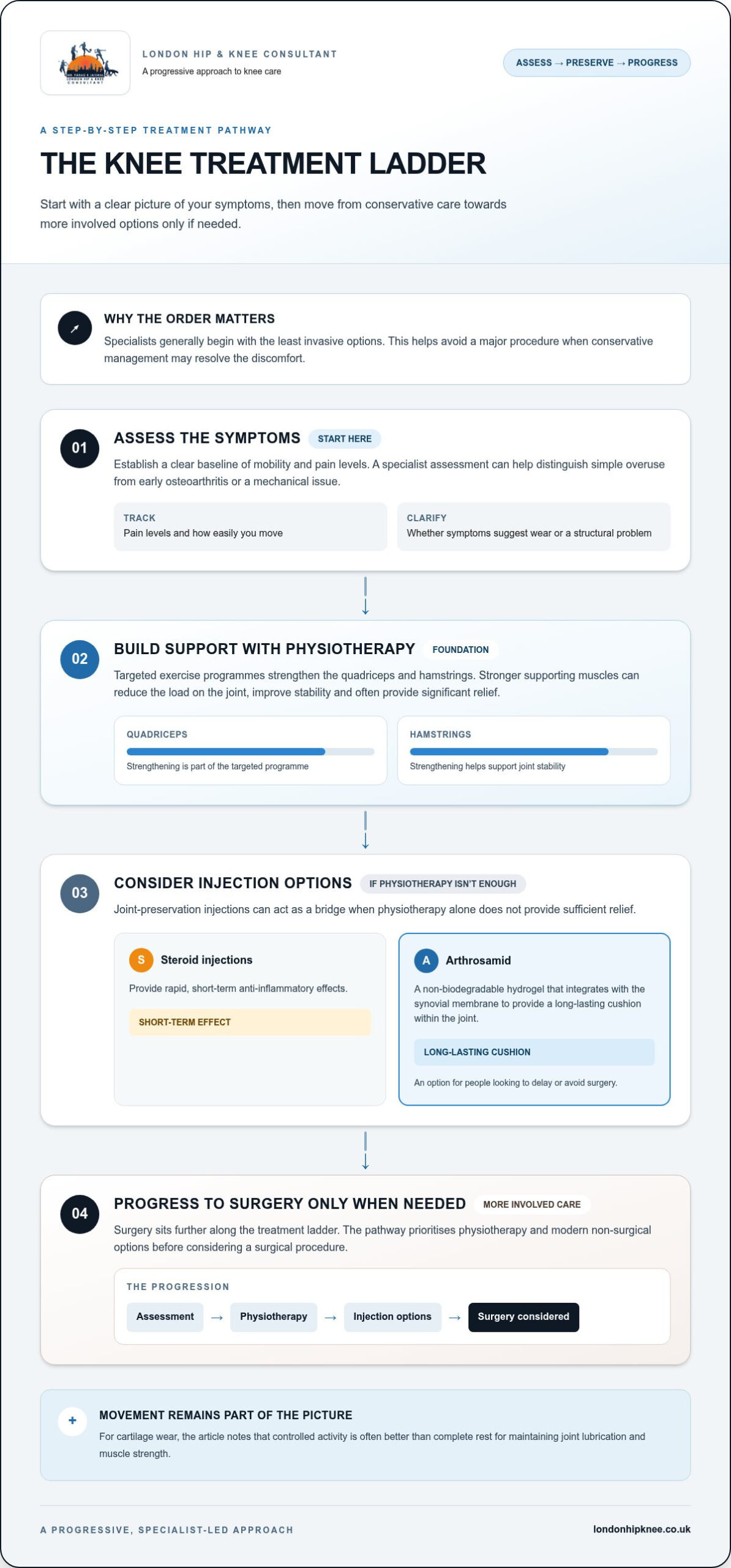
Osteoarthritis is the most common degenerative condition, characterised by the gradual thinning of the protective hyaline cartilage. As this “tread” on the bone ends wears away, the joint space narrows, eventually leading to bone-on-bone contact. This process often begins in just one part of the knee, known as unicompartmental wear, which can cause the leg to bow slightly or feel stiff after rest. It’s a common myth that complete rest is the cure for “wear and tear”; in reality, controlled activity is often superior for maintaining joint lubrication and muscle strength. If you’re concerned about progressive stiffness, a specialist assessment at London Hip & Knee Consultant can help differentiate between simple overuse and the early stages of osteoarthritis.
Navigating Treatment: Non-Surgical vs Surgical Pathways
Treating a knee condition isn’t a one-size-fits-all process. Most specialists follow a “treatment ladder,” starting with the least invasive options before progressing to more complex interventions. This methodical approach ensures you don’t undergo a major procedure if your discomfort in knee joint can be resolved through conservative management. A crucial first step involves assessing knee symptoms and when to seek care to establish a clear baseline of your mobility and pain levels. Physiotherapy remains the foundation of this journey; targeted exercise programmes that strengthen the quadriceps and hamstrings reduce the load on the joint, often providing significant relief whilst improving overall stability.
Specialist Injections: Arthrosamid and Beyond
When physiotherapy alone doesn’t provide sufficient relief, joint preservation injections offer a modern “bridge” therapy. Whilst traditional steroid injections provide rapid, short-term anti-inflammatory effects, they don’t address the underlying mechanical cushioning. Arthrosamid is different. It’s a non-biodegradable hydrogel that integrates with the synovial membrane to provide a long-lasting cushion within the joint. This treatment is particularly effective for those looking to delay or avoid surgery, as it offers a superior relief profile compared to temporary corticosteroid shots that may only last a few weeks.
Modern Surgical Interventions
If your discomfort in knee joint reaches a stage where biological therapies and physiotherapy no longer provide the freedom of movement you require, surgical options are now highly refined. Knee arthroscopy is a minimally invasive “keyhole” procedure used to repair meniscal tears or remove loose debris. For more advanced wear, a partial knee replacement targets only the damaged compartment, preserving your natural ligaments and healthy bone. In cases of extensive osteoarthritis, a total knee replacement restores alignment and eliminates bone-on-bone friction. Many premier London clinics now utilise robotic-assisted systems, such as the Stryker MAKO, to improve surgical precision, which often leads to same-day discharge or significantly shorter hospital stays than were possible a decade ago.
How to Assess Your Knee Health at Home
Monitoring the progression of discomfort in knee joint over a fortnight provides invaluable data for your specialist. Instead of relying on a vague memory of when the pain started, try to document specific triggers in a dedicated log. Do you feel a sharp catch when descending stairs, or a dull ache after twenty minutes of squatting in the garden? Perhaps the discomfort only surfaces at rest, after you’ve finished a long walk. By evaluating these functional limitations, essentially asking “what can I no longer do comfortably that I could do six months ago?”, you create a clearer picture of the joint’s health. It’s vital to remember that a home assessment is a structured tool to enhance your clinical consultation, not a replacement for a formal medical diagnosis.
The “Red Flag” Checklist
Certain symptoms require immediate attention to prevent long-term joint damage or systemic issues. If you’re unable to bear any weight on the leg, this is a clear sign of structural instability or acute injury that requires an urgent specialist review. Visible deformity or significant nocturnal pain that prevents sleep are also high-priority indicators that the joint is under severe stress. Additionally, if the knee feels hot to the touch, appears persistently red, or is accompanied by a fever, it’s essential to rule out infective conditions such as septic arthritis. These “red flags” represent the threshold where home monitoring must shift to immediate clinical intervention.
Monitoring Mobility and Range of Motion
You can track your joint’s mechanical function through simple, repeatable tests that measure strength and flexibility. The “Straight Leg Raise” involves lying flat and lifting your leg without bending the knee; this helps assess quadriceps strength and joint stability. You should also measure your degree of flexion by noting how far you can comfortably bend the knee towards your glutes compared to your unaffected side. Using a symptom diary to provide clear, objective data for your London consultant ensures that your first appointment is as productive as possible. This record of triggers and limitations helps bridge the gap between your daily experience and a precise diagnostic pathway. If your self-assessment reveals persistent mobility issues or worsening pain, book a specialist consultation at London Hip & Knee Consultant to discuss your findings with an expert.
Specialist Orthopaedic Care in London
Seeking private care in London offers a level of continuity and speed that is often unavailable within larger, more stretched healthcare systems. When dealing with persistent discomfort in knee joint, the uncertainty of a long waiting list can be as distressing as the physical symptoms themselves. At London Hip & Knee, our team organises care across multiple central locations, ensuring you can access expert advice at a time and place that suits your busy schedule. This efficiency extends to advanced diagnostics; we facilitate rapid access to high-resolution MRI and X-ray imaging, allowing us to bypass the months of delay typically associated with elective orthopaedic pathways.
The Benefit of Consultant-Led Diagnosis
Accuracy is the cornerstone of any successful recovery journey. Mr Parag Jaiswal brings over 18 years of medical experience to every consultation, providing a level of diagnostic precision that only comes from treating thousands of complex joint conditions. You won’t just receive a cold scan report; instead, you’ll benefit from a comprehensive physical examination and a collaborative dialogue. This approach often involves working closely with specialist physiotherapists to ensure your recovery is holistic and sustainable. Transitioning from your initial diagnosis to a tailored treatment plan with a single, trusted expert provides the steady, reliable guidance essential for long-term success.
Creating Your Bespoke Recovery Plan
Every patient has a different definition of what it means to be “better.” For some, it’s the ability to walk the dog through the park without a nagging ache; for others, it’s returning to the golf course or a favourite hobby. We don’t just treat the discomfort in knee joint as an isolated clinical problem; we treat it as a significant barrier to your personal freedom and mobility. Your bespoke plan will include realistic milestones, dedicated post-treatment support, and long-term monitoring to ensure your joint health remains optimal for years to come. Whether you require a modern hydrogel injection or a more complex surgical intervention, the focus remains on restoring your quality of life. Taking the first step toward resolution is simple. By choosing a private consultation in London, you’re selecting a path guided by expertise, empathy, and a commitment to surgical and non-surgical excellence.
Reclaiming Your Mobility and Active Lifestyle
Addressing persistent discomfort in knee joint doesn’t always mean facing major surgery. We’ve explored how a systematic home assessment provides the data needed for a precise clinical dialogue. Whether your symptoms stem from a degenerative meniscus tear or early-stage osteoarthritis, modern orthopaedics offers a spectrum of effective “bridge” therapies. Options like non-surgical Arthrosamid injections provide long-lasting cushioning, whilst minimally invasive arthroscopy addresses mechanical issues with surgical precision.
Mr Parag Jaiswal brings over 18 years of specialist experience to help you navigate these choices across multiple convenient London locations. You don’t have to manage this journey alone or rely on temporary fixes that only mask the symptoms. By seeking expert guidance, you can move away from the cycle of painkillers and return to the activities you love most. Book a consultation with Mr Parag Jaiswal at London Hip & Knee to start your bespoke recovery plan today. We’re here to help you walk, run, and move with confidence once again.
Frequently Asked Questions
What is the most common cause of discomfort in the knee joint for adults?
In adults over 40, the most common causes are osteoarthritis and degenerative meniscus tears. These conditions often develop gradually without a specific injury. Whilst sports-related trauma is frequent in younger patients, older adults typically experience wear-related changes where the joint’s natural cushioning thins. Identifying the source of discomfort in knee joint early allows for more conservative management options before structural damage progresses to a stage requiring joint replacement.
When should I be worried about knee pain and see a specialist?
You should consult an orthopaedic specialist if your symptoms persist for more than a few weeks or if you experience “red flags.” These include an inability to bear weight, visible deformity, or nocturnal pain that prevents sleep. In London, rapid access to consultants like Mr Parag Jaiswal ensures that mechanical issues, such as a locking knee or a suspected meniscus tear, are diagnosed and treated before they cause secondary joint damage.
Can knee discomfort be cured without surgery?
Many knee conditions are successfully managed through non-surgical pathways. Physiotherapy is the primary foundation for recovery, focusing on muscle strengthening to offload the joint. For broader support, practices like Westridge Holistic medicine focus on overall wellness and root-cause healing to complement targeted joint therapies. Additionally, advanced biological therapies and hydrogel injections can provide long-lasting relief for osteoarthritis. These “bridge” treatments aim to restore mobility and delay the need for surgical intervention, allowing patients to return to their favourite hobbies without undergoing a major operation.
How does Arthrosamid help with knee joint discomfort?
Arthrosamid is a non-biodegradable polyacrylamide hydrogel that provides a long-lasting cushion within the joint. Unlike steroid injections that only reduce inflammation temporarily, Arthrosamid integrates with the synovial membrane to improve joint lubrication and reduce friction. This specialised therapy is particularly effective for managing discomfort in knee joint caused by osteoarthritis, offering a modern alternative for patients in London who wish to avoid or delay a total knee replacement.
Is an MRI always necessary to diagnose knee discomfort?
An MRI is not always required for a diagnosis. Under NICE guideline NG226, clinicians can often diagnose osteoarthritis in adults aged 45 and over based on clinical symptoms alone, such as activity-related pain and minimal morning stiffness. However, if a specialist suspects a structural mechanical issue like a meniscus tear or ACL injury, an MRI becomes essential to visualise the soft tissues and plan the most effective surgical or non-surgical intervention.
How long does recovery take after meniscus surgery?
Recovery from a knee arthroscopy for a meniscus tear is typically faster than traditional open surgery. Most patients can return to light office work within a few days and resume low-impact activities after two weeks. A full return to high-impact sports generally takes between four and six weeks, depending on the complexity of the repair. Following a structured physiotherapy plan is vital to restore full range of motion and prevent future injuries.
Can I still exercise if I have knee joint discomfort?
Exercise is not only possible but highly recommended for maintaining joint health. Low-impact activities such as swimming, cycling, and targeted resistance training help support the knee by strengthening the surrounding musculature. It’s important to avoid high-impact movements that trigger sharp pain, but complete rest can lead to joint stiffness and muscle atrophy. A specialist can help you design a safe exercise regime that protects your cartilage whilst improving your mobility.
What is the difference between knee discomfort and arthritis?
Discomfort is a subjective symptom, whereas arthritis is a clinical condition involving structural changes to the joint. Discomfort may arise from temporary inflammation, a minor strain, or a mechanical catch. Arthritis, specifically osteoarthritis, involves the progressive thinning of hyaline cartilage and narrowing of the joint space. Whilst discomfort is often the first sign of arthritis, a specialist assessment is required to determine if the sensation is due to wear and tear or a different pathology.