

Could pain on the outside of your hip be bursitis, or is something else causing it? If lying on that side or climbing stairs makes the area ache, it’s understandable to search for “bursitis hip” and wonder what the pain means. Pain over the outer hip is a symptom pattern, though, not proof that the bursa is inflamed.
Hip bursitis is one possible cause, but pain in this area can also involve nearby tendons, the hip joint or the lower back. The location and behaviour of your symptoms can offer clues, but they cannot confirm a diagnosis on their own.
This article explains what hip bursitis means, the symptoms commonly associated with lateral hip pain, and how they may differ from hip osteoarthritis or referred pain. You’ll also learn what an assessment may involve and when specialist input could help clarify persistent or unclear symptoms, so you can decide on sensible next steps.
Key Takeaways
- Searching “bursitis hip” can point to a possible cause, but outer-hip pain alone doesn’t confirm what’s behind your symptoms.
- Notice where you feel pain and what affects it. These patterns may help distinguish lateral hip pain from osteoarthritis or pain referred from the lower back.
- An assessment may consider your symptom history, hip movement, tenderness, strength and any relevant back symptoms before deciding whether further tests are needed.
- Activity adjustments and clinician-guided exercise may form part of an individualised plan, based on your symptoms and daily function.
- If your pain persists, recurs or remains unclear, a hip-focused assessment may help clarify whether the joint, tendons or referred pain could be involved.
Hip bursitis explained: what causes pain on the outside of the hip?
Pain over the outer hip is often called “hip bursitis”, but that name doesn’t always identify the tissue causing it. Clinicians may use greater trochanteric pain syndrome (GTPS) as a broader term for pain around this area. It can involve the bursa, nearby tendons or both. GTPS describes a group of symptoms; it isn’t proof that a bursa is inflamed. A search for bursitis hip can be a useful starting point, but it cannot confirm a diagnosis.
Where is the greater trochanter, and what is a bursa?
Place your hand on the side of your hip, just below your waist. The hard prominence you can feel is the greater trochanter, the upper part of the thigh bone (femur). A bursa is a small, fluid-filled sac that helps reduce friction where tissues move against one another, including around this bony prominence. Bursae support smooth movement, but their presence doesn’t mean they are the source of pain.
Nearby are the gluteus medius and gluteus minimus, two muscles at the side of the buttock. Their tendons attach near the greater trochanter. Together, the muscles help move the leg out to the side and steady the pelvis when you stand or walk. Problems affecting these tendons may contribute to lateral hip pain, which is one reason “bursitis” can be an incomplete label. The broader term Greater trochanteric pain syndrome reflects the range of structures that may be involved.
What does hip bursitis pain typically feel like?
Symptoms vary, but you may notice tenderness over or around the bony point on the outer hip. Discomfort can become more noticeable when lying on that side, walking or climbing stairs. Some people describe a local ache; others find the area particularly sensitive to pressure. These symptoms can affect sleep and everyday movement, but they don’t reveal the cause on their own.
That distinction matters because pain in the same area can come from different tissues, and more than one factor may contribute. A clinician considers where you feel the pain, what aggravates it and how it affects your movement, alongside an examination. These patterns are clues, not diagnostic rules: outer-hip tenderness or pain on stairs cannot confirm bursitis without considering other possible causes.
Hip bursitis or another cause of hip pain? Compare the symptom patterns
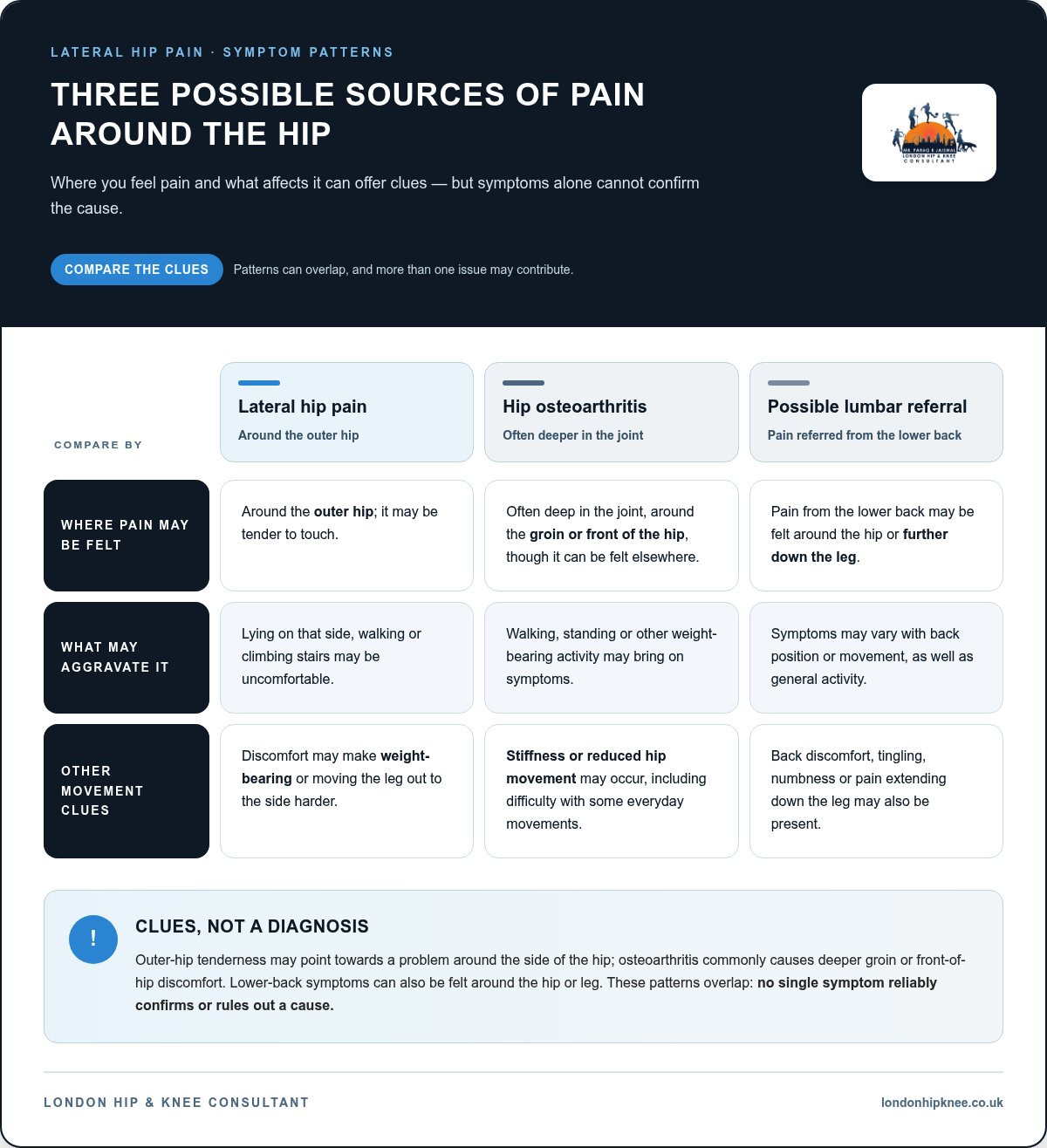
Pain around the hip can come from tissues around the joint, the joint itself or structures elsewhere, including the lower back. Where you feel it and what brings it on can help guide an assessment, but symptoms often overlap. The American Academy of Orthopaedic Surgeons’ guide to hip bursitis describes common features, but no single feature confirms the cause for an individual.
| Possible source | Where pain may be felt | Activities that may aggravate it | Other possible movement symptoms |
|---|---|---|---|
| Lateral hip pain | Often around the outer hip, sometimes tender to touch. | Lying on that side, walking or climbing stairs may be uncomfortable. | Discomfort may make weight-bearing or moving the leg out to the side harder. |
| Hip osteoarthritis | Often felt deep in the joint, around the groin or front of the hip, though it can be felt elsewhere. | Walking, standing or other weight-bearing activity may bring on symptoms. | Stiffness or reduced hip movement may occur, including difficulty with some everyday movements. |
| Possible lumbar referral | Pain from the lower back may be felt around the hip or further down the leg. | Symptoms may vary with back position or movement, as well as general activity. | Back discomfort, tingling, numbness or pain extending down the leg may also be present. |
How can lateral hip pain differ from hip osteoarthritis?
Outer-hip tenderness may point towards a problem around the side of the hip, whereas osteoarthritis commonly causes deeper groin or front-of-hip discomfort. Stiffness and reduced movement can occur with osteoarthritis, but symptoms vary and the patterns overlap. No single symptom, including pain location, reliably confirms or rules out either condition.
Could pain around the hip come from the back?
Yes. The lumbar spine, or lower back, can refer pain towards the hip or leg, so discomfort felt near the hip doesn’t always start there. Tingling, numbness or pain travelling down the leg may mean a wider assessment is needed. These features alone don’t diagnose a nerve or spinal condition, though wellness practitioners such as Livelovelife Chiropractic emphasise how spinal alignment and tension can influence movement and comfort across the lower body.
Pain location can suggest where to look, but it cannot identify the cause on its own. More than one issue may contribute at the same time, such as lateral hip symptoms alongside joint or lower-back problems. “Bursitis hip” is a useful search phrase, not a diagnosis. If pain is persistent or unclear, a specialist hip assessment may help consider the joint, surrounding tissues and referred pain together.
How is hip bursitis assessed and what else is considered?
If you’re searching for “bursitis hip”, an assessment can help establish whether your symptoms fit pain around the outer hip or whether another cause needs consideration. It usually begins with your history and a physical examination. A scan isn’t automatically needed; further tests are considered when they could help answer a clinical question or guide the next steps.
What happens during an assessment for outer-hip pain?
You’ll be asked when the pain began, where you feel it, whether it is changing and what makes it better or worse. Explain how symptoms affect activities such as walking, using stairs, sleeping or getting dressed. Your clinician may also ask about any injury, previous hip problems and back symptoms, including discomfort that travels into the leg.
The examination builds on that history. A clinician may check for tenderness around the outer hip, observe how you walk, assess hip movement and test strength. They may also consider the lower back and how symptoms respond to particular movements. Findings are interpreted together, rather than treating one tender spot or movement test as a diagnosis. The aim is to form a working explanation that considers the surrounding tendons, the hip joint and possible referred pain.
When might imaging help clarify the cause?
Imaging is considered in context. If your symptoms and examination give a clear enough picture, a scan may not add useful information straight away. If the cause remains uncertain, symptoms persist or a closer look could affect management, the clinician may consider further investigation.
- Ultrasound can show soft tissues around the hip, including tendons and the bursa. It may be considered when those structures need closer assessment.
- MRI provides detailed images of soft tissues and other structures around the hip. It may be useful when the examination raises questions that need further clarification.
Neither test is required in every case, and a scan isn’t a substitute for discussing your symptoms and examining how your hip moves. Imaging findings need to be matched with what you experience: a visible change doesn’t necessarily explain pain by itself. The decision to investigate should follow the clinical picture, not the assumption that every suspected case of bursitis needs imaging.
What can help hip bursitis symptoms, and when should you seek help?
What helps depends on what is causing your pain and how it affects your movement. For symptoms described as “bursitis hip”, management is usually tailored to the person rather than based on a single routine. The focus may be on easing aggravation, maintaining comfortable function and addressing factors identified during assessment.
Which conservative approaches may be considered?
Notice which activities reliably increase your discomfort. You may be advised to temporarily adjust how often or how long you do them, rather than stopping all movement. For example, pacing walks or modifying an activity that repeatedly provokes pain may help you manage symptoms while the cause is being clarified.
A clinician or physiotherapist may recommend exercises suited to your symptoms, strength and current ability. This might involve gradually building strength around the hip or adjusting movement habits. There isn’t a universal programme that suits everyone, and exercise isn’t a guaranteed cure. If an activity causes marked or lasting worsening, seek advice about how to adapt it.
Pain relief or an injection may be considered in some circumstances, depending on your health, assessment and likely cause. Medication can have side effects or interact with other medicines, so speak to a healthcare professional before starting it. Don’t stop or change prescribed treatment without medical advice. Discuss any injection with a clinician who can explain whether it’s appropriate for your situation, along with its potential benefits and risks.
When does hip pain need prompt medical attention?
Ongoing hip discomfort can often be assessed in a planned way, but certain symptoms need faster attention. Seek urgent medical advice if you have severe hip pain with a fever, or if the area is hot and swollen. These symptoms need prompt assessment rather than being assumed to be ordinary bursitis.
After an injury, sudden severe pain or being unable to bear weight also warrants urgent medical advice. If you’re unsure how urgently to act, contact NHS 111 for guidance; if you believe you need emergency care, attend A&E or call 999.
Without these warning signs, arrange an assessment if pain persists, worsens, keeps returning or limits everyday activities such as walking and sleeping. A hip-focused assessment can help clarify possible causes and guide appropriate next steps. If your symptoms are ongoing or difficult to understand, book a specialist hip assessment.
When to see a hip specialist in London about suspected bursitis
If outer-hip pain keeps returning, persists despite sensible adjustments or remains difficult to explain, a specialist assessment may help clarify what could be contributing. Searching for “bursitis hip” can be a starting point, but ongoing pain may involve the tendons, the hip joint or referred symptoms, sometimes in combination. Considering these possibilities together can make the next steps more specific to your symptoms.
Mr Parag Jaiswal is a consultant orthopaedic surgeon whose practice focuses on adult hip and knee care. With over 18 years in medicine, he can consider your symptoms alongside your hip history, examination findings and any relevant investigations. The assessment aims to build a clearer picture, not to assume that pain over the outer hip must come from one particular structure.
What should you bring to a hip assessment?
A few notes can make it easier to explain how the problem affects you. Before your appointment, consider recording:
- When the pain began and whether it has changed over time.
- Where you feel it, and whether it spreads to another area.
- Which activities or positions aggravate it, and what makes it easier.
- How it affects daily movement, sleep or other routines.
If you have them, bring relevant scan reports, test results and details of medicines you take. These can add useful context, but they don’t replace a clinical examination or determine the explanation on their own. Mention previous hip problems, injuries or relevant back symptoms too.
How can a specialist clarify persistent hip pain?
The assessment brings together your account of the symptoms, examination findings and any relevant investigations. Depending on your presentation, this may include considering hip movement and strength, tenderness around the joint and surrounding tissues, and whether symptoms could be referred from elsewhere. If you have already had imaging, its findings can be considered alongside your symptoms rather than in isolation.
You should come away with an explanation of the likely causes being considered and appropriate next steps based on your individual situation. This may include further investigation or advice about managing symptoms and function. If your pain is persistent, recurring or unclear, you can arrange a specialist hip assessment.
Take the next step towards understanding your hip pain
Pain on the outer hip may be described as “bursitis hip”, but the term doesn’t confirm which structure is causing it. Symptoms can also relate to nearby tendons, the hip joint or referred pain. Noticing how the pain behaves can be useful, but persistent, recurring or unclear symptoms deserve an assessment rather than guesswork.
A hip-focused evaluation considers your history and examination findings together, with further tests only if they may help clarify the picture. This can support an individualised explanation and sensible next steps for your movement and daily life.
Mr Parag Jaiswal has over 18 years of medical experience and focuses on adult hip and knee orthopaedic care across London. If your symptoms are affecting your routine or you’re unsure what may be causing them, arrange a specialist hip assessment.
A clearer understanding of the cause can help you make informed decisions and move forward with greater confidence.
Frequently Asked Questions
Is hip bursitis the same as greater trochanteric pain syndrome?
Not exactly. “Hip bursitis” is often used to describe pain around the outer hip, but greater trochanteric pain syndrome (GTPS) is a broader term for this pattern of pain. It can involve the bursa, nearby tendons or both. A label of GTPS doesn’t necessarily mean the bursa alone is the source. Assessment helps distinguish possible causes and guide appropriate next steps.
Can hip bursitis cause pain when lying on your side?
Yes. Pain around the outer hip may become more noticeable when you lie on the affected side, because pressure can aggravate sensitive tissues in the area. Some people also find that pain disrupts sleep or makes certain positions uncomfortable. However, this symptom isn’t unique to bursitis or GTPS. If side-lying pain persists, recurs or affects your sleep, consider discussing it with a healthcare professional.
How can you tell hip bursitis from hip osteoarthritis?
You can’t reliably distinguish them from one symptom alone. Lateral hip pain may involve tenderness on the outer side, while hip osteoarthritis often causes deeper discomfort around the groin or front of the hip and may involve stiffness or reduced movement. These patterns can overlap, and osteoarthritis doesn’t feel the same for everyone. A clinician considers your symptom history and examination findings to assess the likely cause.
What happens if hip bursitis is left untreated?
Leaving persistent outer-hip pain unassessed may mean that discomfort continues to affect activities such as walking, sleeping or using stairs. It doesn’t automatically mean lasting damage will occur, and the symptoms may have a cause other than bursitis. If pain isn’t settling, keeps returning or limits your daily routine, an assessment can help clarify what may be contributing and what sensible next steps to consider.
Does hip bursitis show up on an X-ray or MRI scan?
An X-ray mainly shows bones and the hip joint, so it may help assess other causes of pain but doesn’t show the bursa in detail. MRI can provide images of soft tissues, including structures around the hip, and ultrasound may also be considered. Scans aren’t needed in every case, and their findings don’t diagnose the cause on their own. A clinician decides whether imaging is useful after considering your symptoms and examination.
Can walking make hip bursitis worse?
Walking may aggravate outer-hip symptoms, particularly if the distance, pace or frequency is more than feels comfortable. The effect varies, so pain during a walk doesn’t confirm bursitis. If walking consistently increases discomfort, consider adjusting your activity and seek clinical guidance on suitable ways to stay mobile. A clinician can assess whether symptoms relate to the hip’s surrounding tissues, the joint or another source.
When should I see a specialist about hip pain in London?
Consider specialist assessment if your hip pain persists, keeps returning, is worsening or limits everyday activities, especially if the cause remains unclear. A hip-focused review can consider the joint, nearby tendons and possible referred pain together. London Hip & Knee Consultant focuses on adult hip and knee orthopaedic care across London. Mr Parag Jaiswal, a consultant orthopaedic surgeon with over 18 years in medicine, can assess your symptoms and discuss appropriate next steps.