

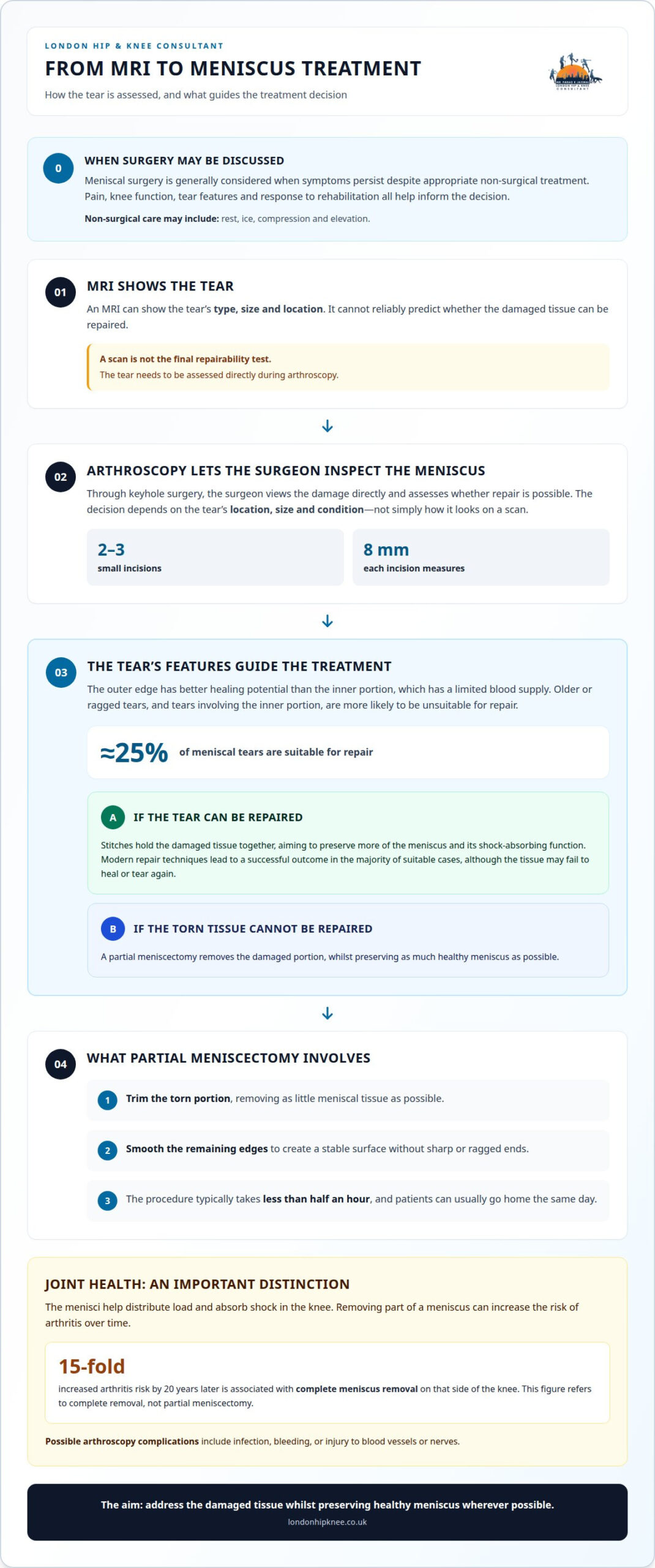
An MRI can show a meniscal tear, but it cannot reliably determine whether the damaged tissue can be repaired. Partial meniscectomy in involves removing only the torn part of the meniscus when repair is not possible, while preserving as much healthy tissue as possible. During keyhole arthroscopy, the surgeon assesses the tear directly before deciding how to treat it.
If you’re experiencing knee pain, catching or restricted movement, it’s understandable to want clear answers about the cause and what surgery involves. The right treatment depends on the features of the tear, and surgery is generally considered when symptoms persist despite appropriate non-surgical treatment.
This article explains how a meniscal tear is assessed, when partial meniscectomy may be considered and what the procedure involves. It also outlines recovery, rehabilitation and factors that affect when you may be ready to drive and return to everyday activities.
Key Takeaways
- An MRI can show a tear’s type, size and location, but whether it can be repaired is assessed directly during arthroscopy.
- Partial meniscectomy removes the damaged portion while preserving as much healthy meniscus as possible; tear location and healing potential help guide the treatment choice.
- Surgery may be considered when symptoms continue despite appropriate non-surgical treatment.
- Recovery varies, but normal activities may take 2–6 weeks after partial meniscus removal, with rehabilitation helping restore movement and strength.
- According to HCA UK, many patients can drive one or two weeks after surgery once they have full movement and can perform an emergency stop.
What happens during meniscus tear surgery?
Arthroscopic surgery allows the surgeon to inspect the meniscus and treat a tear through small openings around the knee. During this keyhole procedure, the surgeon views the damage directly and assesses whether it can be repaired or whether torn tissue needs to be removed. The decision depends on the tear’s location and size, not simply on how it looks on a scan.
Alternatives to partial meniscectomy include non-surgical treatment, such as rest, ice, compression and elevation, or meniscus repair when the tear is suitable. Repair uses stitches to hold damaged tissue together, preserving more of the meniscus. The choice depends on the tear’s features and whether the tissue can heal.
For arthroscopy, the surgeon makes two to three small incisions, each measuring 8 mm. These openings allow instruments to reach the knee and the surgeon to inspect the tear. Seeing the meniscus directly is an important step: an MRI cannot accurately predict whether a tear is repairable.
If the tissue cannot be repaired, the surgeon performs a partial meniscectomy. The torn portion is trimmed, removing as little meniscal tissue as possible. The surgeon then smooths the remaining edges to create a stable surface without sharp or ragged ends. The aim is to preserve healthy tissue while addressing the damaged section.
A meniscectomy for a meniscus tear typically takes less than half an hour. Patients can usually go home on the same day. If the surgeon finds a repairable tear during arthroscopy, repair may be considered instead, using stitches to hold the tissue together. Repair preserves the meniscus, but the decision rests on the tear’s location and size.
The meniscus helps distribute load and absorb shock in the knee. Removing part of it can increase the risk of arthritis in the joint over time. Complete meniscus removal is associated with a 15-fold increased risk of arthritis developing on that side of the knee by 20 years later. That figure concerns complete removal, not partial meniscectomy, which preserves some tissue.
Arthroscopy also carries possible complications, including infection, bleeding, or injury to blood vessels or nerves. Preserving as much healthy meniscus as possible matters for long-term joint health, but it cannot eliminate every future risk. At consultation, the surgeon considers the tear and explains whether repair, trimming or non-surgical treatment best suits your knee.
What is Partial Meniscectomy?
Each knee has two wedge-shaped menisci between the thighbone and shinbone. Partial meniscectomy removes a damaged portion while leaving as much healthy cushioning tissue as possible.
The menisci help distribute load across the knee joint. A tear can disrupt this function, but its position, shape and cause all affect symptoms and treatment options.
Tear symptoms and types
Meniscal tears can cause pain, swelling, stiffness or difficulty bending the knee. Some people also experience catching or locking, particularly when a torn section interferes with smooth movement. Symptoms alone don’t reveal the tear’s shape or healing potential.
Sports-related tears often follow a sudden twisting movement, but meniscal damage can also stem from traumatic impacts or workplace accidents. When managing trauma-related injuries, patients often require coordinated care; for example, US-based networks like The Injury Specialists connect injured individuals with specialised medical and legal professionals. Degenerative tears, by contrast, develop as the meniscus changes over time and are described in adults over 40. An orthopaedic assessment considers how symptoms began, where pain occurs and whether movement is restricted.
Causes and healing potential
A sudden twist during sport can damage the meniscus, whilst gradual wear may contribute to degenerative tears. The tear’s location matters: the outer edge has better healing potential than the inner, avascular portion, which has a limited blood supply.
This difference helps explain why some tears may be repaired, whilst others are more likely to need trimming. The tear’s size and condition also matter. Older or ragged tears, and those involving the inner portion, are more likely to be unsuitable for repair. An MRI can show a tear’s type, size and location, but cannot reliably predict whether it can be repaired.
About 25% of meniscal tears are suitable for repair. This is why the treatment decision considers the individual tear rather than symptoms alone.
Surgery and repair outcomes
Repair aims to preserve the meniscus and its shock-absorbing function. For a suitable patient, modern repair techniques lead to a successful outcome in the majority of cases, although the tissue may fail to heal or tear again.
Partial meniscectomy removes damaged tissue that cannot be repaired, while preserving as much healthy meniscus as possible. Removing meniscal tissue can increase the knee’s risk of arthritis over time, so repair is preferred when feasible. The options have different aims and suitability; neither can be assessed without considering the tear’s location, size and condition.
A camera used during arthroscopy allows the surgeon to inspect the tear directly, since MRI findings cannot confirm whether it can be repaired. This assessment helps determine whether preserving the tissue or removing the damaged part is the appropriate treatment. A specialist meniscus assessment can help clarify which option fits your knee and symptoms.
When surgery may be considered
Meniscal surgery is generally considered when symptoms persist despite appropriate non-surgical treatment. The decision takes into account your pain, knee function, tear characteristics and response to rehabilitation, rather than relying on one symptom alone.
Reasons to consider surgery
Persistent pain, swelling, restricted movement or catching can make daily activities difficult. If symptoms continue after non-surgical care, surgery may be discussed. The tear’s size and location help determine whether repair or partial removal is suitable.
A knee that locks or repeatedly catches needs assessment, but that symptom alone doesn’t determine the right procedure. The surgeon considers your examination, imaging and treatment history together. The aim is to address symptoms while preserving as much healthy meniscal tissue as possible.
Referral and treatment access in London & Essex
NHS pathways provide assessment and treatment for meniscal problems, with surgery considered when clinically appropriate. Waiting times vary between local services and according to clinical priority, so there isn’t one reliable timeframe for everyone in London.
A specialist assessment typically considers how symptoms began, which movements trigger them, knee function and imaging such as MRI. NHS care is accessed through the relevant NHS referral pathway; private assessment can also cover diagnosis and treatment options. The findings guide whether continued non-surgical care, repair or partial meniscectomy is appropriate.
At consultation, explain which activities are limited, whether your knee catches or locks, and what treatment you have already tried. These details help the specialist understand how symptoms affect your function. MRI can show the tear’s type, size and location, but repairability is assessed directly during arthroscopy if surgery proceeds.
If symptoms persist, the next step is to review the diagnosis and your response to treatment with a specialist. Surgery isn’t automatic: the tear’s location and size influence the options, while its effect on everyday movement helps show the impact. A discussion can clarify whether further non-surgical treatment or an operation is appropriate.
Recovery is also part of the decision. Rehabilitation exercises after partial meniscectomy can help restore knee mobility, strength and range of motion. Exercises are guided by your progress and the procedure performed. If repair is chosen instead, recovery is typically longer, so the treatment choice also affects planning for work and activity.
For privately arranged care, an assessment can help clarify the diagnosis, discuss the surgical options and plan the next steps. The conversation should connect your symptoms and scan findings with a clear treatment rationale. A specialist knee assessment can help you understand those options.
Recovery timelines and return to driving
After partial meniscectomy, recovery progresses from walking and everyday movement towards work, exercise and driving. Typical timings offer a guide, while age, underlying health and activity goals can affect progress.
Most patients can walk on the day of surgery or the day after, depending on comfort and the surgeon’s advice. Many regain full knee movement and walk short distances without a limp within around 1–2 weeks. Light household tasks and non-strenuous work may be manageable after two to three days.
Most patients don’t need crutches after a straightforward meniscectomy. If crutches are needed, patients can often stop using them within a week or two. Some are advised to use crutches for several days, so follow the instructions for your procedure rather than treating one timeline as universal.
Return to normal activities after partial meniscus removal typically takes 2–6 weeks. Low-impact exercise, such as cycling, may begin after 2–4 weeks if swelling is controlled and movement and strength are progressing. Physiotherapy can help restore knee mobility, strengthen supporting muscles and improve range of motion. Progress through exercises should reflect your knee’s response and your specialist’s advice.
Work demands matter. Light duties may be possible within days, while physically demanding roles can require 3–6 weeks or longer away from work. Tasks involving prolonged standing, lifting or repeated bending place different demands on the recovering knee than desk-based work. Plan a gradual return that allows duties to increase as movement and strength improve.
Driving may become possible before full recovery, but readiness depends on safe control of the vehicle. Many patients can drive one or two weeks after meniscectomy, once they have full range of motion and can perform an emergency stop. Don’t rely on the calendar alone: being able to move your knee quickly and confidently is central to the decision.
Exercise and sport require a further step up in strength and control. Many patients return to exercise and sports four to eight weeks after meniscectomy. More intense sport may resume after 6-8 weeks following medial meniscectomy, or 8-10 weeks following lateral meniscectomy, depending on progress and the surgeon’s advice. These timings differ by the side of the knee treated and the activity involved.
Full recovery can take from six weeks to three months. Meniscus repair follows a different course, with a typical recovery period of 3–6 months. A staged rehabilitation plan helps patients build strength and return to activity without rushing each milestone.
Clinical assessment and MRI diagnosis
Assessing a meniscal tear involves more than looking at a scan result. During consultation, the specialist considers how the injury happened, where the pain occurs, and whether swelling or restricted movement affects daily activities. For example, pain after twisting and difficulty bending offer different clues from discomfort that developed gradually.
The examination relates those symptoms to knee function. The specialist assesses movement, tenderness and swelling, then considers whether the findings fit a torn meniscus. No single symptom proves the diagnosis or determines whether surgery is needed. This clinical context helps establish whether partial meniscectomy in London may be appropriate or another treatment should be considered.
MRI can assess the tear’s type, size and location, showing where the meniscus is damaged and how extensive the tear appears. The images contribute to treatment planning, but cannot accurately predict whether the tissue can be repaired. A scan maps the damage; it does not settle the choice between meniscus repair and partial meniscectomy in London.
Repairability is assessed directly during arthroscopy, when the surgeon views the meniscus inside the knee. The surgeon examines the torn tissue and judges whether it can hold stitches or whether trimming the damaged portion is more appropriate. This direct view helps resolve uncertainty that MRI images alone cannot settle.
The decision also considers the value of preserving healthy meniscal tissue. If the tear is suitable, meniscus repair aims to retain the tissue and its cushioning role. If it cannot be repaired, partial meniscectomy removes the unstable torn portion while preserving as much healthy meniscus as possible. The tear’s location, size and condition all inform the choice.
Assessment follows a connected sequence: discuss the injury and symptoms, examine knee movement and swelling, review MRI findings, then consider what arthroscopy may reveal. Each step answers a different question. Symptoms describe their effect on you; MRI maps the tear; direct visual assessment determines whether repair is practical.
Bring a clear account of when symptoms began, which movements worsen them, and how the knee affects work or exercise. These examples help the specialist interpret the scan in context, rather than treating an MRI finding in isolation. A specialist knee assessment can help clarify the diagnosis and treatment choices that follow.
Mr. Parag Jaiswal, London Hip & Knee Consultant
Mr. Parag Jaiswal, London Hip & Knee Consultant provides specialist care for knee problems in London and Essex. If pain, catching or restricted movement is affecting daily life, a specialist discussion can help clarify what may be causing it and what steps could follow.
Assessment considers your symptoms, examination and imaging together, rather than treating an MRI finding in isolation. This can help explain whether continued non-surgical care or a surgical option is appropriate, and what recovery may involve. The aim is to give you clear information so you can make an informed decision about your knee care.
If you would like to discuss your symptoms and next steps, contact Mr. Parag Jaiswal, London Hip & Knee Consultant.
Take the next step towards clearer answers
Deciding about knee surgery is not only about choosing a procedure. It is also about understanding what matters to you: easing pain, moving more freely or returning to particular activities. In a discussion about partial meniscectomy in London, sharing these priorities can help shape a treatment plan around your everyday life, rather than focusing solely on scan findings.
You can also use your consultation to talk through uncertainties, including how the options relate to your symptoms and what the next stage would involve. The right decision depends on your assessment and the condition of your knee, so clear, individual guidance can help you move forward with greater confidence.
If you’re ready to discuss your knee and possible next steps, contact Mr. Parag Jaiswal. A considered conversation can help you decide what feels right for your care.
Frequently Asked Questions
How soon can I drive after a meniscectomy?
Many patients can drive one or two weeks after meniscectomy, once they have full knee movement and can perform an emergency stop. The practical test is whether you can control the car safely, including responding quickly in an emergency. If pain or restricted movement affects your ability to do this, driving is not yet appropriate. Discuss your progress at follow-up.
What are meniscal tears?
Meniscal tears are splits or damage in either of the two wedge-shaped pieces of cartilage within the knee joint. They can follow a sudden twist during sport or develop gradually as the tissue changes with age. A tear may cause pain or swelling, but symptoms vary. The shape and position of the damage help explain how it affects movement and which treatments may be considered.
What are the risks of a meniscectomy?
Possible complications include infection, bleeding and injury to blood vessels or nerves. Removing meniscal tissue can also increase the risk of arthritis in the knee over time, because the meniscus helps cushion the joint and distribute load through it. The amount and condition of the remaining tissue matter for long-term joint health. Discuss the potential benefits and risks in relation to your tear and knee.
How is surgery carried out?
Meniscectomy is performed using arthroscopy, with a camera and instruments passed through small incisions around the knee. The surgeon inspects the tear directly, then trims damaged tissue if it cannot be repaired and smooths the remaining edges. If repair is suitable, stitches may be used instead. The operation plan depends on what the surgeon sees inside the joint, not on MRI images alone.
How long do the benefits of a meniscectomy last?
There is no single duration that applies to everyone. A meniscectomy removes unstable torn tissue, so its benefit depends partly on whether that tissue was causing the symptoms. It does not reverse underlying wear in the knee or prevent future changes to the joint. The condition of the remaining meniscus and the knee’s cartilage can influence symptoms over time, making follow-up important if discomfort returns.
How much does a meniscectomy cost?
The price depends on the case and is given after a quote request. Cost factors include the treatment planned, the facilities required and the care involved around the procedure. For a private operation, the quote should make clear what is included, such as the surgical procedure and associated hospital care. Ask for a breakdown so you can understand the costs relevant to your treatment plan.
If I have a meniscectomy, how much meniscus is trimmed?
The amount removed depends on the tear and the condition of the surrounding tissue. In some London procedures, approximately one-third of the meniscus is trimmed, but this is not a fixed amount for every operation. The surgeon aims to remove as little as possible while leaving a smooth, stable edge. The location and extent of the damaged area guide how much tissue can be preserved.
What is a partial meniscectomy and when is it recommended?
A partial meniscectomy removes the damaged portion of a meniscus while preserving as much healthy tissue as possible. It may be considered when symptoms persist despite appropriate non-surgical treatment and the torn tissue cannot be repaired. The choice depends on the tear’s size, position and condition. MRI helps map the damage, while direct inspection during arthroscopy assesses whether repair is possible.