

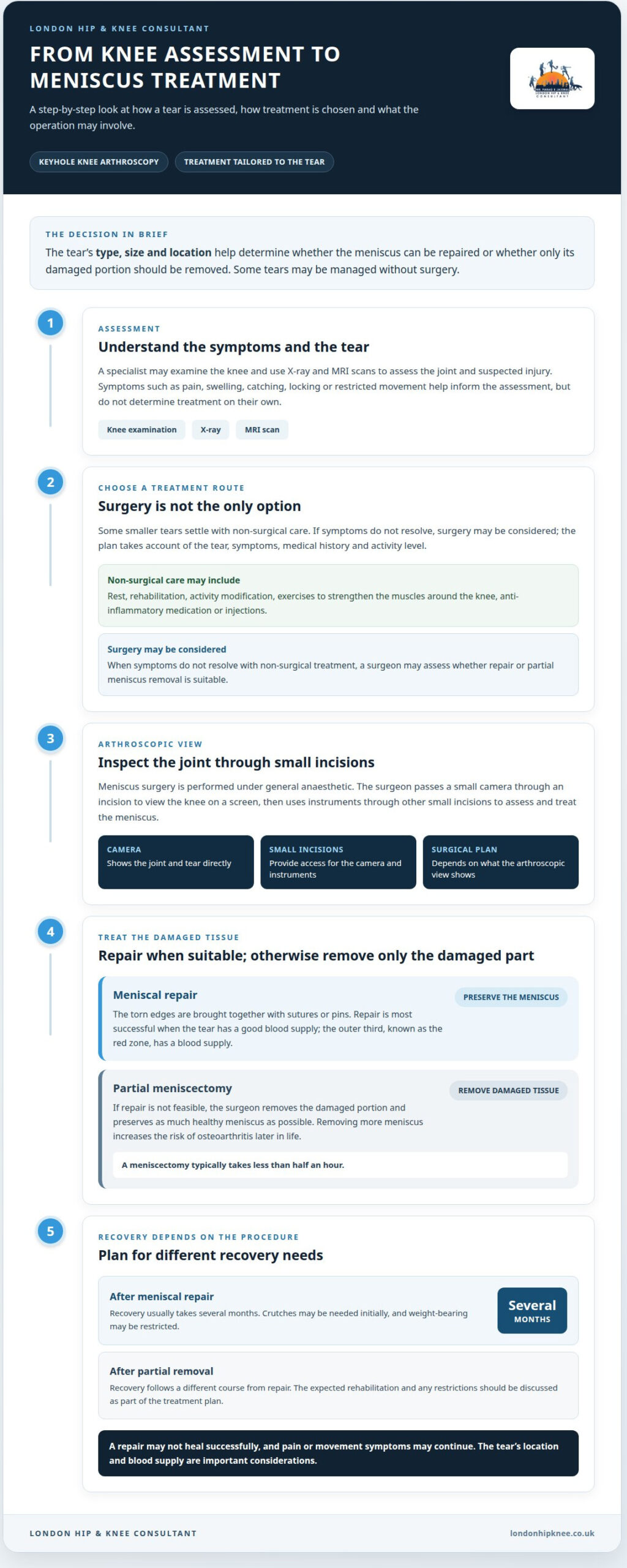
Meniscus surgery is usually performed as keyhole knee arthroscopy. A small camera helps the surgeon assess and treat the tear through small incisions. A meniscus tear repair surgeon in London considers the tear’s type, size and location when deciding whether repair or partial removal is more suitable. When possible, repair preserves the meniscus; if repair is not feasible, only the damaged portion may be removed.
Knee pain, swelling, catching or difficulty moving the joint can make everyday activities uncertain. It’s understandable to want clear answers about what surgery involves and how recovery may unfold. Recovery depends on the procedure: meniscal repair usually takes several months, while recovery after partial removal follows a different course.
This guide explains how meniscus surgery is performed, what influences the treatment decision and what to expect during recovery. It also outlines how a consultant knee surgeon can assess your symptoms and plan care around the tear and your activity goals, helping you approach the next step with a clearer understanding.
Key Takeaways
- Knee arthroscopy uses a small camera and incisions to assess and treat a meniscal tear.
- Whether a tear can be repaired or needs partial removal depends on its type, size and location.
- Some tears can be managed with non-surgical care, such as rest, rehabilitation and activity modification.
- Recovery depends on the procedure: meniscal repair generally takes longer than partial removal.
- A specialist assessment can help clarify treatment options and how they relate to your symptoms and activity goals.
What is meniscus surgery?
Meniscus surgery treats a tear in the cushioning cartilage inside the knee joint, usually through arthroscopic keyhole surgery. A small camera lets the surgeon inspect the injury and guide treatment through small incisions.
Knee arthroscopy, surgery and anaesthesia
During knee arthroscopy, the surgeon inserts a camera through a small incision and views the joint on a screen. Instruments passed through other small incisions let the surgeon assess the tear and treat damaged tissue. This approach is used for both repair and partial meniscus removal.
Meniscus surgery is performed under general anaesthetic. The surgical plan depends on what the arthroscopic view shows, including the tear’s position and extent. For a meniscectomy, the surgeon removes the damaged portion rather than repairing it; this procedure typically takes less than half an hour.
Keyhole surgery uses small incisions, but it is still an operation inside the knee joint. The camera lets the surgeon see the meniscus directly, while instruments enable precise treatment. For someone with knee pain after a sports injury, this assessment can clarify whether the torn tissue is suitable for repair.
Arthroscopic repair techniques
During arthroscopic repair, the surgeon brings the torn edges together using sutures or pins. The technique depends on the tear’s extent and whether its position makes repair practical. Meniscal repair is most successful when the tear has a good blood supply, making its location an important part of the surgical assessment.
When repair is not feasible, partial meniscectomy removes the damaged section while preserving as much healthy meniscus as possible. The aim is to avoid removing more tissue than necessary.
Risks and complications of repair
A repair may not heal successfully, and knee pain or movement symptoms may continue. The tear’s location and blood supply matter because repairs are most successful when the tissue has a good blood supply.
Repair also involves a more protective early recovery: crutches may be needed initially, and weight-bearing may be restricted. These considerations are part of weighing repair against partial removal, which treats the damaged portion rather than attempting to reconnect it.
What is a Meniscal Tear?
Each knee contains two menisci: the medial meniscus on the inner side and the lateral meniscus on the outer side. These wedge-shaped pieces of cartilage sit between the thighbone and shinbone, helping absorb shock and stabilise the knee joint. A tear can affect how comfortably the joint bends, straightens and bears weight.
A sudden bend or twist can tear a meniscus, including during sports or an awkward turn. Tears can also develop as cartilage weakens with age; degenerative tears may occur in adults over 40. Symptoms include knee pain, swelling, stiffness, catching or locking, and restricted movement. The pattern and severity of symptoms help shape the assessment, but do not alone determine the treatment.
A specialist assessment may include examining the knee and using X-ray and MRI scans. These steps help assess the joint and suspected injury. Decisions also take account of the tear’s type, size and location, as well as your age, medical history and activity level. For example, a small tear at the outer edge may be managed without surgery, while persistent locking or restricted movement needs careful assessment.
Non-surgical treatment options
Some smaller tears settle with rest, rehabilitation and time. A non-surgical plan may include modifying activities, exercises to strengthen the muscles around the knee, anti-inflammatory medication or injections. Resting the affected knee and applying ice packs may help relieve pain. The aim is to manage symptoms and support function without an operation, with the approach guided by the tear and your response to care.
If pain, swelling, locking or difficulty straightening the knee lasts more than a few days after a twisting injury, seek a specialist review. Persistent symptoms can affect everyday movement and help determine whether further assessment or a different treatment approach is appropriate.
Surgical trimming and repair options
When symptoms do not resolve with non-surgical treatment, surgery may be considered. If the tear is suitable, repair aims to preserve the meniscus and its shock-absorbing role. The outer third has a blood supply, known as the red zone, which matters because repairs are most successful in tears with good blood supply.
If repair is not feasible, partial meniscectomy removes only the damaged portion and preserves as much healthy tissue as possible. Removing more meniscus increases the risk of osteoarthritis later in life, so preserving tissue is an important consideration. A meniscus surgery assessment can help clarify which approach fits your symptoms and tear.
Private treatment access and locations
In London, a private assessment can help clarify whether a torn meniscus needs surgery or can be managed without it. The decision depends on the tear’s type, size and location, your symptoms, medical history and activity goals. An examination, X-ray and MRI scans may contribute to the assessment. Together, these findings help shape a treatment plan rather than relying on a scan alone.
Ask the surgeon what the assessment suggests, whether repair or partial removal is suitable, and why. It’s also useful to discuss the expected rehabilitation, any weight-bearing restrictions, and how the plan accounts for your work or sports activities. For example, a tear with good blood supply may be more suitable for repair, while a tear that cannot be repaired may require removal of only its damaged portion.
Private medical insurance cover for meniscus repair in the UK depends on your policy, the treatment covered and any authorisation requirements. Review your policy terms and speak with your insurer about whether assessment, surgery and associated care are included. Clarify what documentation is needed and whether the proposed treatment must be authorised before it begins.
NHS referral and waiting times for meniscus surgery in London depend on the referral pathway, clinical urgency and local service capacity. A referral leads to an assessment; the findings and the impact of symptoms help determine whether surgical treatment is appropriate. The pathway may also consider non-surgical care first, particularly when symptoms and tear characteristics make that approach suitable.
For patients considering private care, the practical process is to arrange an assessment, discuss the findings and agree on the next step. London travel and hospital arrangements can matter, particularly if knee pain affects walking or public transport. Plan how you will get to and from appointments, and discuss post-operative travel needs as part of your care plan.
Biologic options are distinct from routine repair or trimming. Meniscus transplantation may be considered for selected patients with significant meniscal loss and ongoing pain. It replaces torn cartilage with donor cartilage or a cultured patch from a laboratory. This is not a standard option for every torn meniscus: the amount of remaining tissue, symptoms and suitability for the procedure all matter.
Private treatment costs depend on the case and are provided after a quote request; factors include the recommended treatment and care required. The key distinction is whether the plan involves assessment alone, repair, partial removal or a more specialised option such as transplantation. Before deciding, ask for a clear explanation of what the proposed treatment and follow-up include.
Consultant knee surgeons in London
A consultant knee surgeon assesses whether a meniscal tear explains your symptoms and what treatment fits the injury. During a consultation, describe when the knee pain began, whether it followed a twisting movement, and whether swelling, catching or locking affects daily tasks. These details help guide the examination and treatment discussion.
The assessment may include a physical examination, X-ray and MRI scans. Each step adds a different part of the clinical picture: examination considers movement and symptoms, while imaging helps assess the knee joint. MRI findings need to be considered alongside your symptoms and examination, rather than treated as the sole reason for a procedure.
A useful consultation explains the treatment decision in relation to your tear. The surgeon considers its type, size and location, as well as your age, medical history and activity goals. For example, someone hoping to return to sport may need to discuss how repair or partial removal affects rehabilitation and the timing of increased activity.
Ask how the proposed procedure addresses the damaged tissue and what alternatives apply to your case. If repair is suitable, the plan aims to preserve the meniscus; if it is not feasible, partial removal targets the damaged portion. A clear explanation should connect the scan and examination findings to the recommended approach, rather than presenting surgery as inevitable for every tear.
Preparation and recovery are also part of the discussion. Arthroscopic surgery uses small incisions and a camera to treat the knee. After repair, crutches may be needed initially, and weight-bearing may be restricted. Clarify what support and rehabilitation the plan involves and how it relates to your work, home responsibilities or sports routine.
London care may involve NHS or private assessment pathways, but the clinical questions remain similar: what is causing the symptoms, what treatment is appropriate, and what recovery will involve? Bring a concise account of the injury, including any twisting movement, and note when swelling or locking occurs. This helps make the consultation more focused.
The central takeaway is to understand the reasoning behind the recommendation. A consultant should relate the examination, imaging and activity goals to a specific plan, whether that means continued non-surgical care or an operation. Before proceeding, make sure you understand the proposed procedure, the role of crutches and the rehabilitation steps that follow.
How can I verify a London surgeon’s GMC registration and knee surgery experience?
Start with the surgeon’s full name and GMC number, then find the matching entry in the GMC’s online register. Check that the identity and registration details correspond to the person you are considering. A matching registration is one part of your assessment, not proof of specific meniscus surgery experience.
Next, examine the surgeon’s stated specialty and clinical focus. Knee surgery experience is more relevant to a meniscal tear than a broad description of orthopaedic practice alone. Look for clear information about knee arthroscopy, meniscus repair and partial meniscectomy. If the information is unclear, raise the point during your consultation and ask for a direct explanation.
Experience should relate to the decision you face. Ask whether the surgeon assesses both repair and partial removal, and how they decide between them. A useful answer should connect the tear’s location, size and pattern with your symptoms and activity goals. For instance, ask how the surgeon would approach a tear that may be suitable for repair rather than assuming removal is necessary.
Discuss the surgeon’s role throughout your care. Clarify who reviews your examination and imaging, who performs the procedure, and who oversees follow-up. These questions help you understand continuity from assessment to recovery. Ask how the plan may change if arthroscopic findings differ from what the scans suggested.
Use specific questions rather than relying on general claims about expertise:
- What knee procedures do you perform for meniscal tears?
- How do you decide whether repair is suitable?
- What could lead you to recommend partial removal instead?
- Who will guide rehabilitation and review progress?
- What are the possible risks and limits of the recommended approach?
The answers should be understandable and consistent with your clinical findings. For example, the explanation should link the proposed treatment to the tear’s location and your symptoms, rather than promise a particular result. You should also understand the recovery demands, including any period using crutches or restrictions on weight-bearing.
Keep the details together: the surgeon’s name, GMC number, stated specialty, proposed procedure and reasons for recommending it. Compare those details with the consultation discussion and written treatment plan. If repair is recommended, make sure the surgeon explains why preserving the meniscus is appropriate for your tear. If removal is proposed, ask which damaged tissue would be removed and how much healthy meniscus would be preserved.
Registration and relevant experience answer different questions. The GMC entry helps identify the doctor and their registration details; discussion of knee procedures shows how their experience relates to your decision. Use both to understand who will treat you and why that treatment fits your case.
Mr. Parag Jaiswal, London Hip & Knee Consultant: Meniscus surgery
Mr. Jaiswal provides meniscus surgery for people whose symptoms and assessment indicate that an operation may be appropriate. A specialist assessment can clarify the tear’s characteristics, discuss whether repair or partial removal is suitable, and explain the recovery considerations for the recommended approach.
If knee pain, swelling or locking is affecting your movement, an assessment can help you understand the available options and decide on a considered next step. The discussion can take account of your symptoms, activity goals and findings from your knee examination and imaging.
For a consultation about your knee symptoms and meniscus surgery, contact London Hip & Knee Consultant.
Take the next step towards a clearer plan
Choosing a meniscus tear repair surgeon in London is not only about deciding whether to have surgery. It’s also about understanding how the recommended approach relates to your symptoms, priorities and daily life. Use your next conversation to clarify what you want to return to, what concerns you most, and what information would help you feel confident about the decision.
You can bring your questions about treatment and recovery to an assessment with Mr. Parag Jaiswal, London Hip & Knee Consultant. A focused discussion can help you understand the options for your knee and consider a suitable way forward without rushing the decision.
If you’re ready to discuss your knee symptoms and possible next steps, contact London Hip & Knee Consultant. A considered conversation is a constructive place to begin.
Frequently Asked Questions
What Is the Meniscus, and Why Is It So Important?
The meniscus is cartilage that helps the knee manage forces during everyday movement. Each knee has a medial meniscus and a lateral meniscus, supporting stability as you walk, bend or turn. If one is damaged, tasks such as climbing stairs or changing direction may become uncomfortable. Preserving healthy meniscal tissue matters because removing more tissue can increase the risk of osteoarthritis later in life.
What are Meniscal Tears?
Meniscal tears are splits or damage in either of the knee’s two menisci. They can follow a sudden twist or develop as cartilage weakens with age. Symptoms may include pain, swelling, stiffness, catching or locking. For example, a knee that catches when you try to straighten it needs assessment alongside your injury history. A tear’s location and extent help determine whether treatment should focus on rehabilitation, repair or removing damaged tissue.
Which London orthopaedic surgeons specialise in meniscus tear repair?
London Hip & Knee Consultant, led by consultant orthopaedic surgeon Mr Parag Jaiswal, offers meniscus surgery in London. Relevant experience includes assessing meniscal tears and discussing repair alongside partial removal where appropriate. Ask how the recommendation relates to your examination, imaging and activity goals. A meniscus tear repair surgeon in London should explain the reasoning and recovery implications clearly.
Which London hospitals offer meniscus repair surgery?
Hospital arrangements for meniscus surgery in London depend on the treatment pathway, so there isn’t one hospital that applies to every patient. Before deciding on a procedure, clarify where your assessment and surgery will take place, and how follow-up is arranged. The hospital setting also matters practically: consider how you will travel home after surgery and whether you may need support.
How much does private meniscus repair surgery cost in London?
Private meniscus surgery costs depend on the case and are provided after a quote request. The recommended treatment, whether repair or partial removal, and the care required affect the overall cost. If you have private medical insurance, cover depends on your policy and any authorisation requirements. Ask your insurer whether your assessment and proposed treatment are covered, and clarify what the quote includes before proceeding.
How do surgeons decide between meniscus repair and partial meniscectomy?
Surgeons consider the tear’s type, size and location, alongside symptoms, medical history and activity goals. Repair may suit a tear that can be stitched or pinned, particularly when it has a good blood supply. If repair isn’t feasible, partial meniscectomy removes the damaged portion while preserving healthy tissue. The decision balances the possibility of preserving the meniscus against the tear’s characteristics and the symptoms it causes.
What are the success rates and re-tear risks of meniscus repair?
An average meniscal repair success rate of 90% has been reported, but that figure doesn’t predict an individual result. Repair is most successful in tears with good blood supply, and healing depends on the tear and recovery. A repaired meniscus can fail to heal or tear again; the risk relates to factors such as tear characteristics and rehabilitation. Ask the surgeon what success means for your symptoms and activity aims.
What is recovery and rehabilitation like after meniscus repair?
Recovery after meniscal repair usually takes several months, and returning to sport may also take several months. Crutches and restricted weight-bearing may be needed initially, so rehabilitation progresses according to the repair and the surgeon’s instructions. Many patients return to their normal routine about 1-2 months after surgery, while athletes may need 3-6 months before returning to sport, depending on the severity of the condition.