

What if sore outer-hip pain isn’t caused by bursitis alone? Pain when you lie on that side, walk or climb stairs can fit trochanteric bursitis, but it may also involve the gluteal tendons or another hip condition. If you’re searching for “trochanteric bursitis injection london”, it’s understandable to want relief and to wonder whether an injection is the right next step.
A corticosteroid injection may ease pain for some people, sometimes for weeks or months, but it isn’t a cure and results vary. A careful assessment matters: treating the painful area without understanding the cause may not address what’s keeping your symptoms going.
This guide explains how a specialist assesses outer-hip pain, when an injection might be considered, what the procedure and potential risks may involve, and what its limitations are. You’ll also learn why rehabilitation can remain important after an injection. Mr Parag Jaiswal, a Consultant Orthopaedic Surgeon with over 18 years in medicine, provides adult hip care across several London locations. Treatment decisions are based on individual assessment and clear explanations.
Key Takeaways
- Outer-hip pain can have several causes, so an assessment considers your symptoms and examination findings before treatment is chosen.
- A clinician may review your pain pattern and movement, and consider whether further investigations are needed.
- An injection, activity adjustments and guided exercise have different aims and limitations.
- If you’re considering a trochanteric bursitis injection in London, discuss your medicines, allergies and individual risks beforehand.
- A specialist hip consultation can help clarify the likely diagnosis and the benefits and risks of possible next steps.
Trochanteric bursitis injection in London: what causes outer hip pain?
Aching or tenderness over the outer hip can make everyday movements uncomfortable. You might notice it when walking, climbing stairs or pressing on the area, and lying on the affected side can bring the pain sharply into focus. These symptoms can prompt questions about an injection, but they don’t identify the cause on their own. Before considering a trochanteric bursitis injection in London, it helps to understand which structures may be involved.
What is greater trochanteric pain syndrome?
The greater trochanter is the prominent part of the upper thighbone that you can feel at the side of your hip. Small, fluid-filled sacs called bursae sit between bone and nearby soft tissues. They help reduce friction as muscles and tendons move over the bone. If a bursa becomes irritated, it may contribute to pain, but it isn’t necessarily the only source.
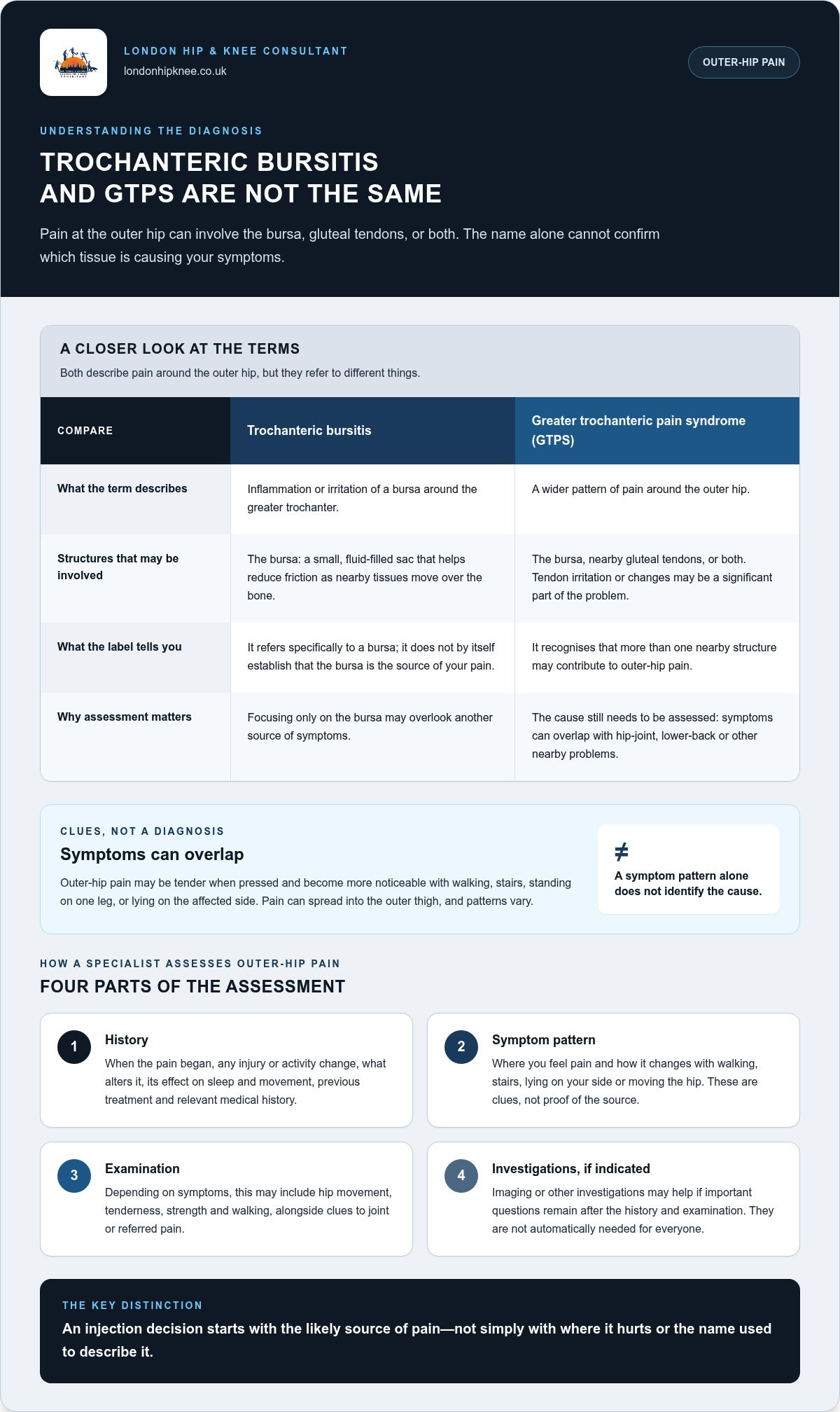
Greater trochanteric pain syndrome (GTPS) is a term for pain around the outer hip that may involve the bursa, nearby gluteal tendons, or both. The gluteal tendons attach muscles in the buttock to the thighbone and help control hip movement. Tendon irritation or changes may be a significant part of the problem, with or without bursal inflammation. This broader view matters because focusing only on the bursa may overlook another source of symptoms.
Clinicians don’t always use “trochanteric bursitis” and “GTPS” in exactly the same way. Trochanteric bursitis refers specifically to an inflamed bursa, while GTPS describes the wider pattern of pain around the greater trochanter. For a general overview of the narrower term, see Trochanteric bursitis. The label alone, however, can’t establish which tissue is causing your pain.
Which symptoms can prompt an assessment?
People with GTPS often describe tenderness over the bony outer hip and discomfort that increases when the area is pressed or loaded. Walking, taking stairs or standing on one leg may aggravate it. Pressure from lying on the painful side can also disturb sleep. Some people find that pain is worse at night or after a period of activity.
Patterns vary. Pain may spread into the outer thigh, and symptoms can overlap with problems inside the hip joint, the lower back or other nearby tissues. Symptoms are useful clues, not a diagnosis. An assessment looks at where the pain is, what brings it on and how your hip moves, helping distinguish possible causes before treatment is considered. If you’re exploring a trochanteric bursitis injection in London, this distinction matters: the right approach depends on the source of your pain, not simply its location.
How a London specialist assesses whether an injection is appropriate
An injection decision starts with identifying the most likely source of your pain, not simply matching a symptom to a treatment. Outer-hip discomfort can arise from the bursa, gluteal tendons, the hip joint or referred pain from elsewhere. More than one factor may contribute. Symptoms alone can’t confirm whether an injection is suitable; the decision depends on your history, examination and, where needed, investigations.
If you’re searching online for “trochanteric bursitis injection london”, remember that an assessment aims to identify the cause before settling on a treatment. A specialist consultation usually follows a clear sequence:
- History: You’ll be asked when the pain began, whether it followed an injury or change in activity, what makes it better or worse, and how it affects sleep and everyday movement. Previous treatment and relevant medical history also help shape the discussion.
- Symptom pattern: The clinician will explore where you feel pain and whether it changes with walking, stairs, lying on your side or moving the hip. Pain associated with particular positions or activities can offer useful clues, but doesn’t prove which tissue is responsible.
- Examination: Depending on your symptoms, this may include checking hip movement, tenderness, strength and how you walk. Findings can help distinguish pain around the outer hip from problems within the joint or signs that point towards a source elsewhere.
- Investigations, if indicated: If the history and examination leave important questions unanswered, imaging or other investigations may help guide the diagnosis. They aren’t automatically needed for every person with outer-hip pain.
What happens during a hip assessment?
The examination is tailored to your symptoms and comfort. Your clinician may ask you to move your hip or walk, then compare how different movements affect the pain. The overall pattern matters: tenderness near the greater trochanter may be considered alongside tendon strength, joint movement and clues to referred pain. These findings help build an individual view of the problem, rather than relying on one symptom or test.
The assessment should lead to a discussion of what the findings suggest and which options may suit your circumstances. That might mean considering whether the bursa is likely to be involved, whether tendon-related pain needs attention, or whether another diagnosis warrants further investigation. Searching for a trochanteric bursitis injection london should prompt questions about diagnosis and suitability, not an assumption that an injection is the automatic next step.
When might imaging or ultrasound guidance be considered?
Imaging may be useful when examination findings are unclear, symptoms persist or the clinician needs to investigate another possible cause. The choice depends on the clinical question. A scan isn’t a substitute for discussing your symptoms and examining the hip. If an injection is being considered, ultrasound guidance may be used to help the clinician visualise the area and guide placement. It isn’t required in every case, and guidance doesn’t guarantee a particular result.
At a specialist hip assessment, you can ask how the diagnosis was reached, what an injection is intended to address and what alternatives may be reasonable. This helps you weigh the likely benefits and limitations before deciding. A specialist hip assessment can provide a clearer basis for that decision.
Injection or other care: weighing benefits, limits and alternatives
An injection isn’t automatically the first or only treatment for outer-hip pain. Its suitability depends on the likely cause, how symptoms affect you and what has already been tried. A clinician may discuss an injection alongside activity adjustments and rehabilitation, rather than treating it as a stand-alone solution.
| Option | Possible aim | Limit to consider |
|---|---|---|
| Injection | Reduce local pain or inflammation for selected patients. | Response and duration vary; it may not address the underlying cause. |
| Activity modification | Reduce aggravating pressure or loading while symptoms settle. | Adjustments alone may not resolve the problem or restore strength. |
| Clinician-guided exercise | Build strength and support a gradual return to activity. | Exercises need to match the diagnosis and be progressed appropriately. |
What might an injection help with?
If assessment suggests that local inflammation is contributing to pain, an injection may be considered to ease symptoms and make movement more manageable. Relief is individual, may be temporary and shouldn’t be promised as permanent. The medication used and method of delivery depend on the clinical assessment; there isn’t one protocol that suits everyone.
Even if pain improves, that response doesn’t confirm exactly which tissue caused it. An injection also doesn’t necessarily correct tendon-related problems, movement patterns or other factors contributing to symptoms. Repeated corticosteroid injections may raise concern about effects on tendon structure, so the potential benefits and risks need to be weighed in your circumstances.
What non-injection options may form part of care?
Activity changes can mean temporarily reducing movements that repeatedly aggravate the hip, then building back towards them as symptoms allow. A clinician-guided exercise plan may focus on strengthening and managing the load placed on the hip. The right exercises depend on what the assessment suggests: an approach for tendon-related pain may differ from one intended for another diagnosis.
Other hip conditions can cause overlapping symptoms but need different treatment decisions. For example, a problem within the hip joint may prompt discussion of hip arthroscopy treatment choices and recovery, rather than assuming the bursa is the source. The diagnosis should guide the plan.
If you’re considering a trochanteric bursitis injection in London, ask what the injection is intended to treat, what improvement would look like and what alternatives are reasonable. Pain relief may create an opportunity to move more comfortably or take part in rehabilitation, but it doesn’t replace a plan for the underlying cause. A balanced decision considers the likely benefit, limitations and your priorities, not just the appeal of a quick intervention.
Preparing for a trochanteric bursitis injection and understanding recovery
Knowing what will happen can make a proposed injection feel less daunting. Before proceeding, the clinician should review your health and explain why the treatment is being considered, what it involves and which potential benefits and risks apply to you. If you’re exploring a trochanteric bursitis injection in London, use the consultation to raise concerns and make sure you understand the plan before giving consent.
What should patients discuss before the procedure?
Give the clinician a clear picture of your health, including relevant medical conditions, allergies, medicines and any previous reactions to injections or medicines. Mention blood-thinning medication in particular. Decisions about whether medicines need adjusting are individual and must be made by a clinician. Don’t stop prescribed treatment or fast unless you’ve been specifically advised to do so.
The clinician should describe the planned procedure in language you understand, including the intended treatment area and what to expect immediately afterwards. You should have the opportunity to ask questions, discuss alternatives and provide informed consent. If anything is unclear, ask for an explanation before the procedure begins.
What can recovery feel like?
Experiences differ. The area may feel sore or temporarily more uncomfortable after an injection, and pain relief isn’t guaranteed or necessarily immediate. Your clinician should explain what to expect in your particular case and give personalised advice about activity, aftercare and any follow-up. Don’t assume the same restrictions or recovery pattern apply to everyone.
Potential risks should be explained proportionately. These can include a temporary pain flare, changes in skin colour around the injection site and, rarely, infection. If you have concerns about a possible side effect, contact the treating team for advice. Seek urgent medical help for severe or rapidly worsening symptoms, or signs that could suggest infection, such as increasing redness, warmth or swelling around the area, particularly if you feel unwell.
Follow the instructions provided for your procedure rather than relying on general advice. Ask whom to contact if symptoms worsen, a reaction develops or you’re unsure whether your recovery is progressing as expected. Clear guidance helps you respond appropriately without treating every brief ache as a complication or overlooking a concerning change.
A careful conversation is part of safe, informed care. Before deciding, make sure you know the purpose of the injection, its limitations, your individual risks and what other care may be recommended afterwards. A specialist assessment of outer-hip pain can help explain the findings and possible next steps. Arrange a specialist hip assessment.
Choosing a London hip assessment and deciding your next step
Persistent pain over the outer hip can leave you unsure whether to wait, change your activities or consider an injection. A specialist consultation can help replace that uncertainty with a clearer account of what may be causing your symptoms and which options are reasonable. The aim is not to steer every patient towards a procedure, but to make a decision based on the assessment and your individual needs.
What should a useful treatment discussion cover?
Your clinician should explain the examination findings and how they relate to your symptoms, including whether the bursa, nearby tendons, hip joint or another source may be involved. You can then discuss possible next steps, the potential benefits and limitations of each option, and any relevant risks. A recommendation should follow your individual assessment, rather than being based on the label “bursitis” alone.
Your priorities matter. Tell the clinician what you most want to get back to, whether that’s sleeping comfortably, walking further or managing stairs with less difficulty. It can help to note when the pain began, what tends to aggravate it, what you’ve already tried and any questions you want answered. For example, you might ask:
- What do the findings suggest is contributing to my pain?
- Why might you recommend one treatment over another?
- What benefits, limitations or risks should I weigh up?
- How would we review whether the chosen approach is helping?
These questions support a shared, realistic discussion. You should leave with a better understanding of the reasoning behind the plan, even if further investigation or time is needed before a firm conclusion can be reached.
Arrange a specialist hip consultation in London
Mr Parag Jaiswal is a Consultant Orthopaedic Surgeon with over 18 years in medicine. His practice focuses on adult hip and knee care across several London locations. His specialist focus provides relevant context for assessing hip symptoms and discussing possible treatment pathways, while recommendations remain specific to your presentation.
If you’re searching for a trochanteric bursitis injection in London, start by asking what is causing your outer-hip pain. A diagnosis-led consultation can help clarify whether an injection is among the options to consider or whether another approach may be more appropriate. An injection isn’t automatically the recommendation, but an assessment can give you a clearer basis for deciding what to do next.
Take the next step towards understanding your symptoms and treatment choices. Arrange a specialist consultation.
Take a confident next step towards hip care
Ongoing outer-hip pain can make it harder to sleep, move freely or keep up with the activities that matter to you. You don’t have to decide on an injection before seeking advice. A useful next step is to have your concerns heard and your symptoms considered in context, so that any treatment decision feels informed rather than rushed.
If you’re searching for trochanteric bursitis injection london, prepare for a consultation by noting what you hope to get back to, what tends to aggravate your hip and what you’d like clarified. This can help keep the discussion centred on your priorities and give you space to weigh the options at your own pace.
Discuss your hip symptoms and possible next steps with a specialist hip consultant in London. Arrange a specialist hip consultation to gain a clearer understanding of your options and plan how to move forward.
Frequently Asked Questions
Does a trochanteric bursitis injection hurt?
Sensations vary, and you may feel a brief sting, pressure or discomfort during the injection. A painless procedure can’t be guaranteed, as the experience depends partly on your individual sensitivity and the technique used. If you’ve searched “trochanteric bursitis injection london” and feel anxious about discomfort, tell the clinician. They can explain the steps beforehand and discuss what comfort measures may be appropriate for you.
Can I drive home after a trochanteric bursa injection?
Whether you can drive depends on the procedure, how you feel afterwards and your personal circumstances. Ask your treating clinician for specific advice before the appointment, particularly if you plan to travel alone. Don’t drive if pain, discomfort or feeling unwell could affect your ability to control the car safely. If you’re unsure, arrange another way home until you’ve received guidance tailored to your situation.
Can a trochanteric bursitis injection be repeated?
A repeat injection isn’t automatic. Your clinician should consider the diagnosis, your response to previous treatment, the time since the last injection and your individual risks. If symptoms persist or return, reassessment can help determine whether the original explanation still fits or whether another cause needs attention. This review matters because repeating treatment without reconsidering the problem may not address what is driving your pain.
Can I have a trochanteric bursitis injection if I take blood thinners?
Taking blood thinners needs to be discussed with the treating clinician before any injection. Tell them the names and doses of all prescribed medicines so they can consider your individual bleeding risk and advise whether any action is needed. Don’t stop, delay or change a blood thinner on your own. If another clinician manages your medication, your treatment team may need to take their advice into account before proceeding.
Can a trochanteric bursa injection affect blood sugar?
Yes, a steroid injection may affect blood glucose in some people, although the response varies. If you have diabetes, tell your clinician before treatment and discuss your usual glucose control, monitoring and personal risks. Follow the advice given about checking your levels afterwards, and contact your diabetes team if you’re unsure how to respond to a change. Don’t alter your diabetes medication without guidance from your healthcare professional.
When should I seek urgent medical advice after a hip injection?
Seek urgent medical advice if you develop severe or rapidly worsening pain, feel significantly unwell, or notice increasing redness, warmth or swelling around the injection site. Fever or chills alongside these symptoms also warrant prompt assessment. These signs aren’t an exhaustive list, so seek help if you’re seriously concerned about a change in your condition. Use emergency services if you believe you’re experiencing an emergency.
Is trochanteric bursitis the same as hip arthritis?
No. Trochanteric bursitis concerns a bursa near the outside of the hip, while arthritis affects the hip joint. Pain from either problem can be felt in nearby areas, so symptoms alone may not distinguish them. If you’re searching “trochanteric bursitis injection london”, remember that the injection question depends on identifying the likely source of pain. A clinical assessment can help clarify the diagnosis and guide treatment choices.